

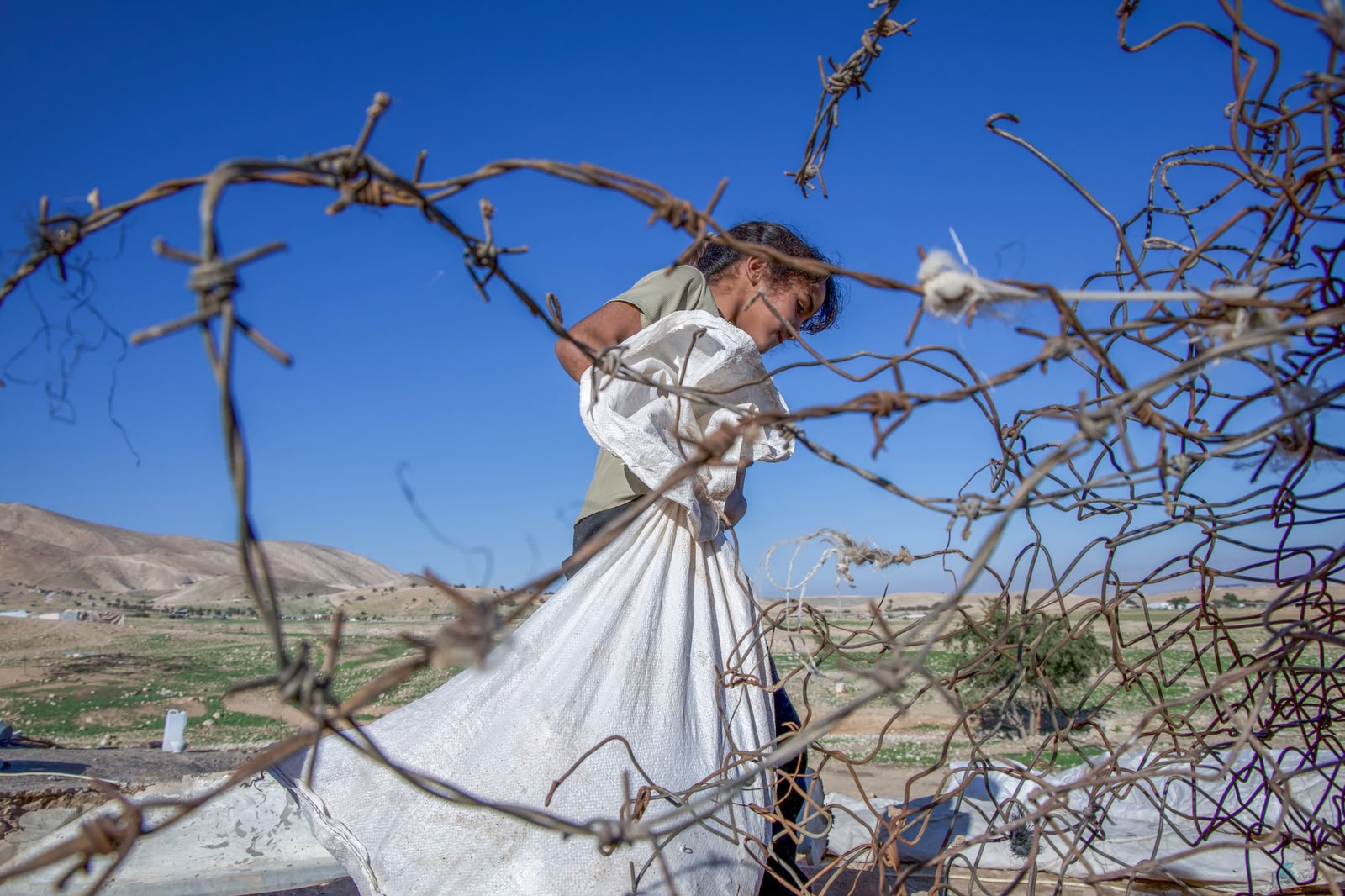
The West Bank did not wake up one morning to find itself transformed. We’ve watched it fracture slowly, piece by piece: a home demolished, an olive tree cut down, a farmer losing access to his land, a shop shuttered, a checkpoint turning a 15-minute trip into an hours-long journey, a child hemmed in by barbed wire on their way to school. For me, the camera began as a passion before becoming a profession. On May 28, 2021, it became a cause. That day, my cousin Zakaria Hamayel was killed by Israeli forces and settlers in Beita, south of Nablus, while protesting a settlement outpost in the town. I decided then to document my people’s struggle: their stories, their pain, and their hopes. Over the past few years, as I’ve reported on villages and communities from Nablus to al-Khalil, I’ve come to barely recognize the only land I’ve ever known.
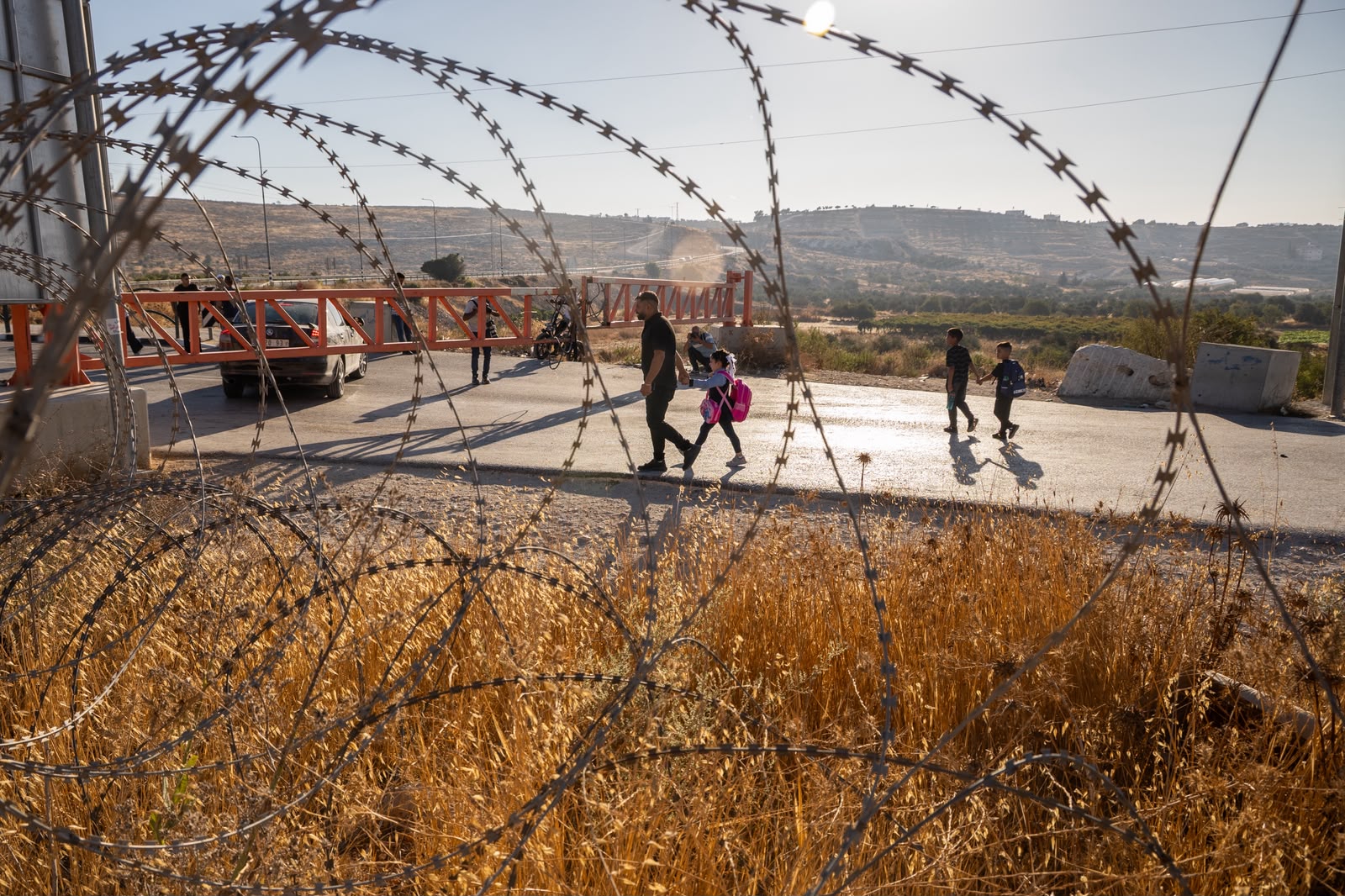
In al-Khalil, I watched families run through their morning routines. Parents parked their cars on the side of the road leading to the Qilqis checkpoint, grabbed backpacks from the back seats, and held their children’s hands as they led them to duck under the gate. The rest of the commute, which used to take only a few minutes by car, would have to be on foot. The gate has been closed for nearly three years now, dislocating the village from the rest of Masafer Yatta and transforming daily life.
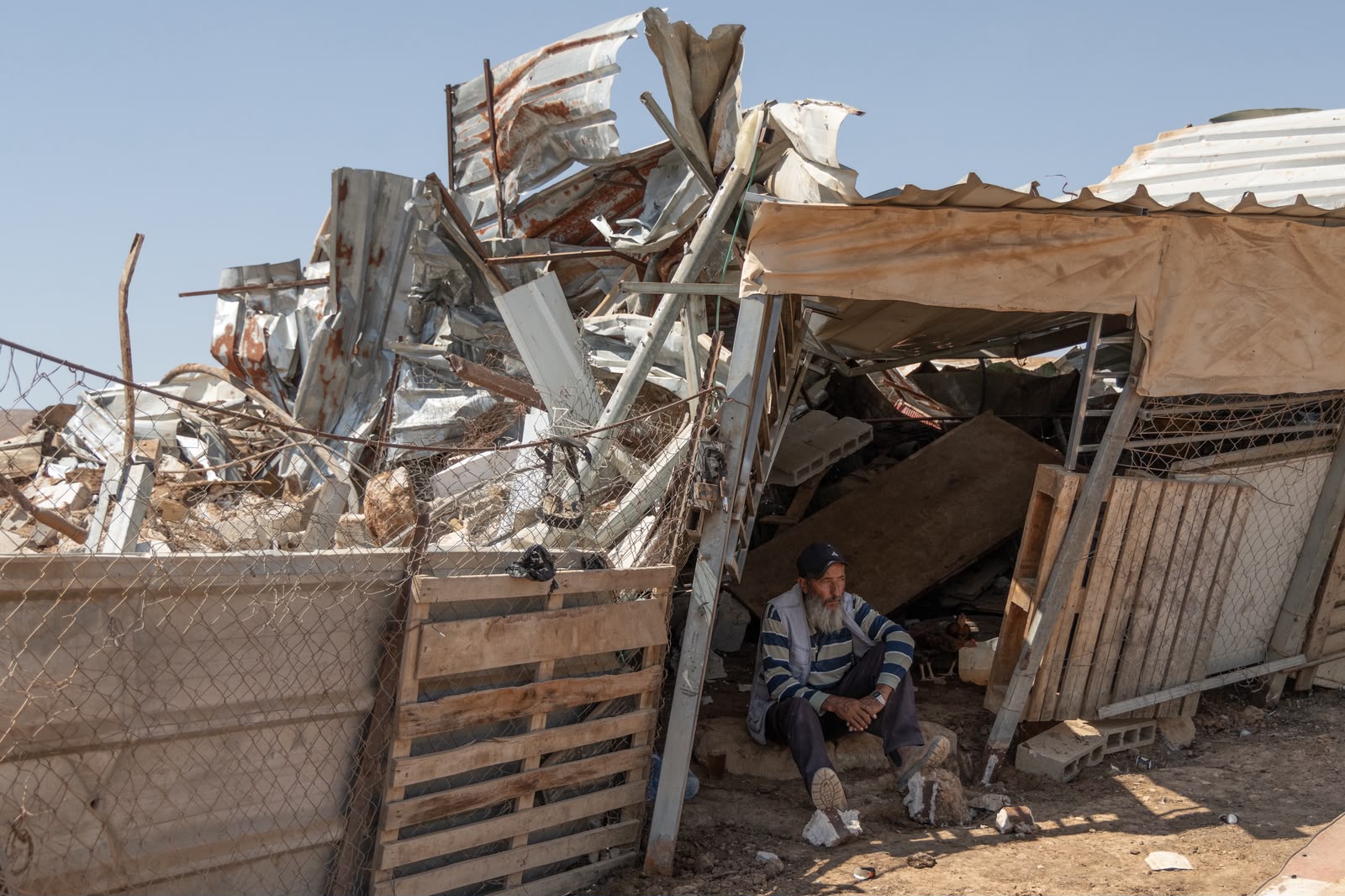
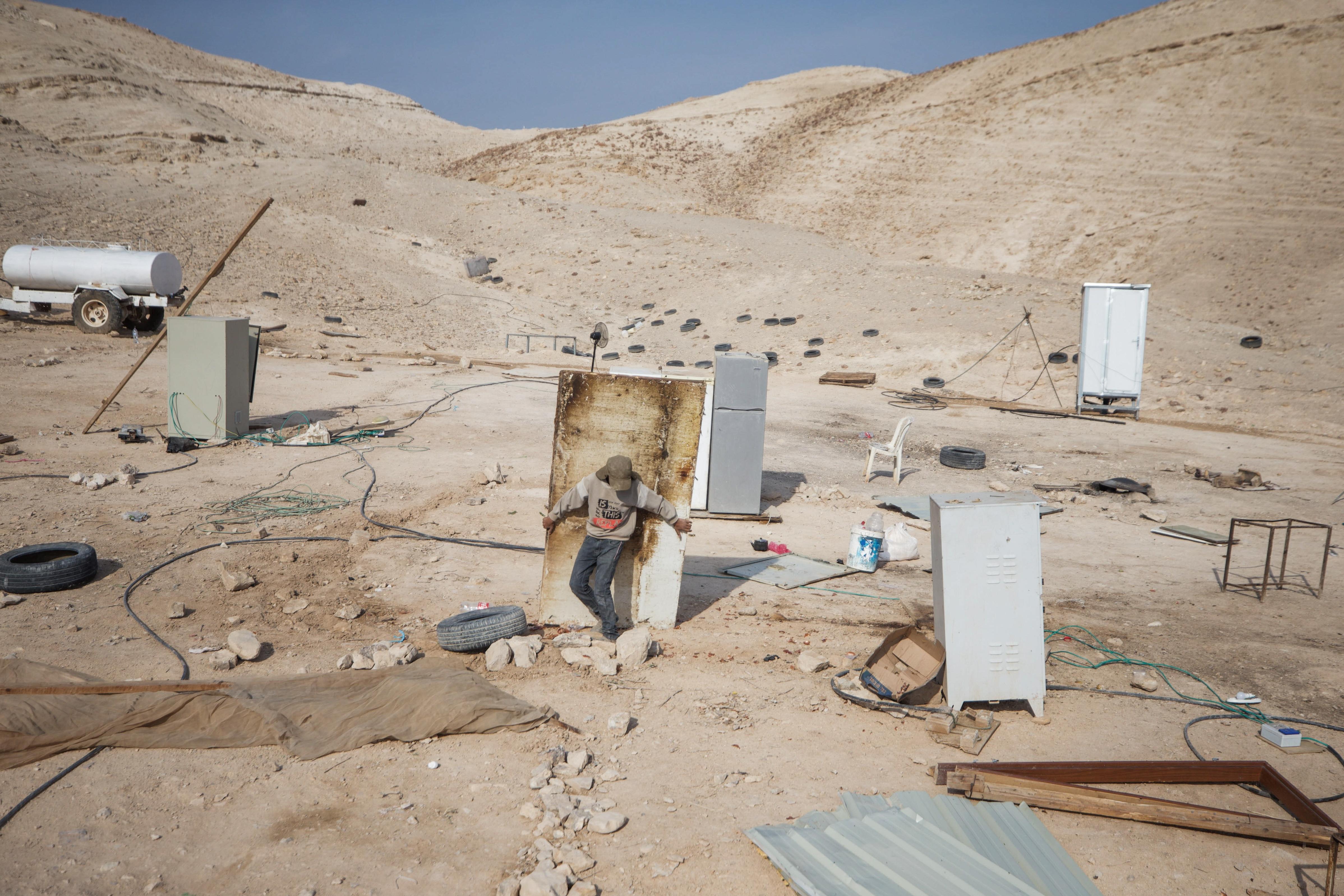
A few villages away, a man sat in the doorway of what was once his home. Israeli forces demolished it and a number of other houses on September 8, uprooting 30 residents from the herding community of Khirbet al-Fakhit. They are among the nearly 40,000 internal refugees who have been displaced across the occupied West Bank since 2023.
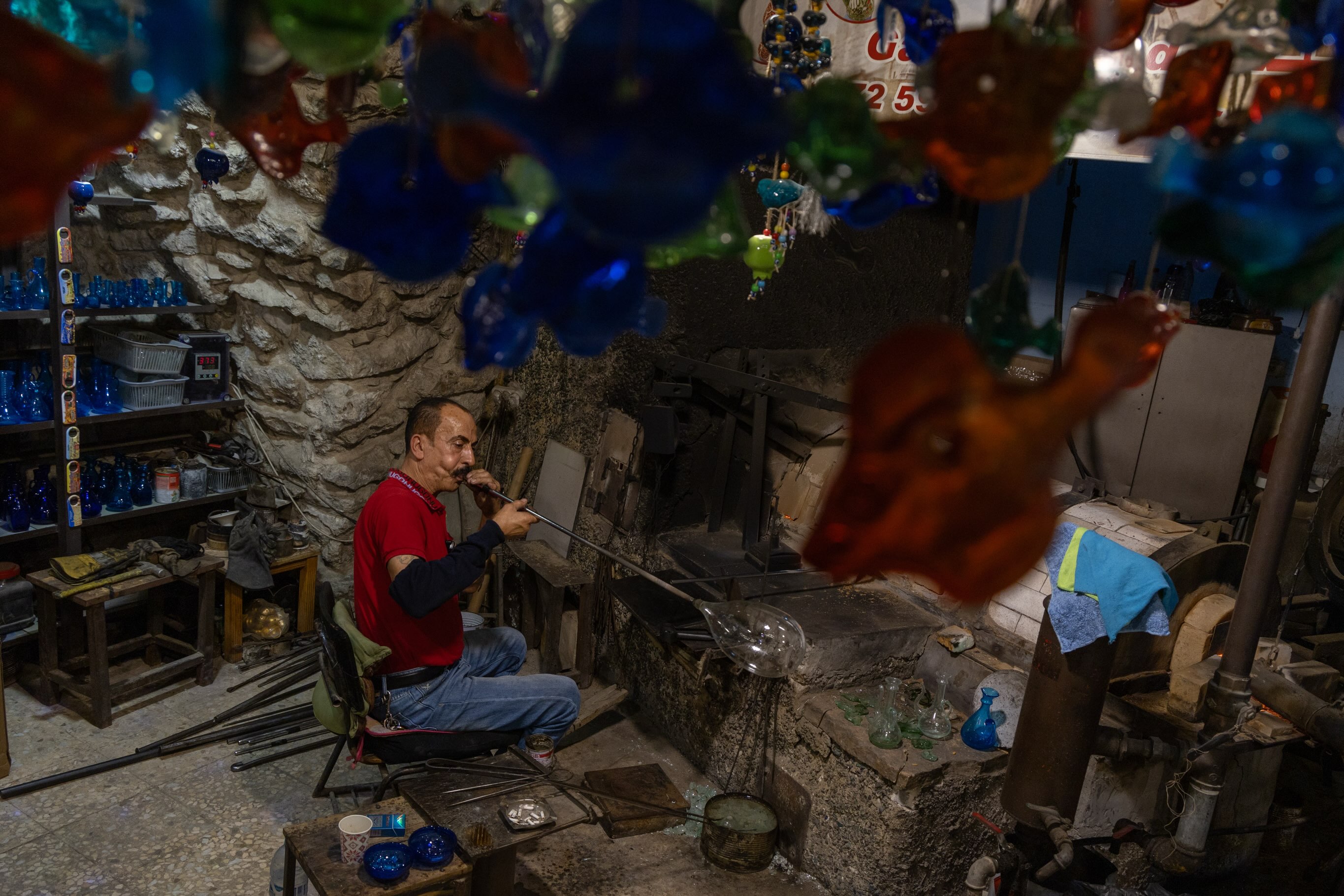
In the Old City, more than 300 shops are shuttered, the streets are deserted, and occupation soldiers have been deployed to guard settlers on their weekly tours. The 64-year-old glass blower Yaqub al-Natsheh relit the furnace at his family’s glass factory, Land of Canaan, for the first time in three years. Nestled in a quiet alley, it is the last traditional glass workshop in the city; the other 17 have closed. As he blew and shaped molten glass by hand, he was doing what so many here do: refuse to let something disappear.
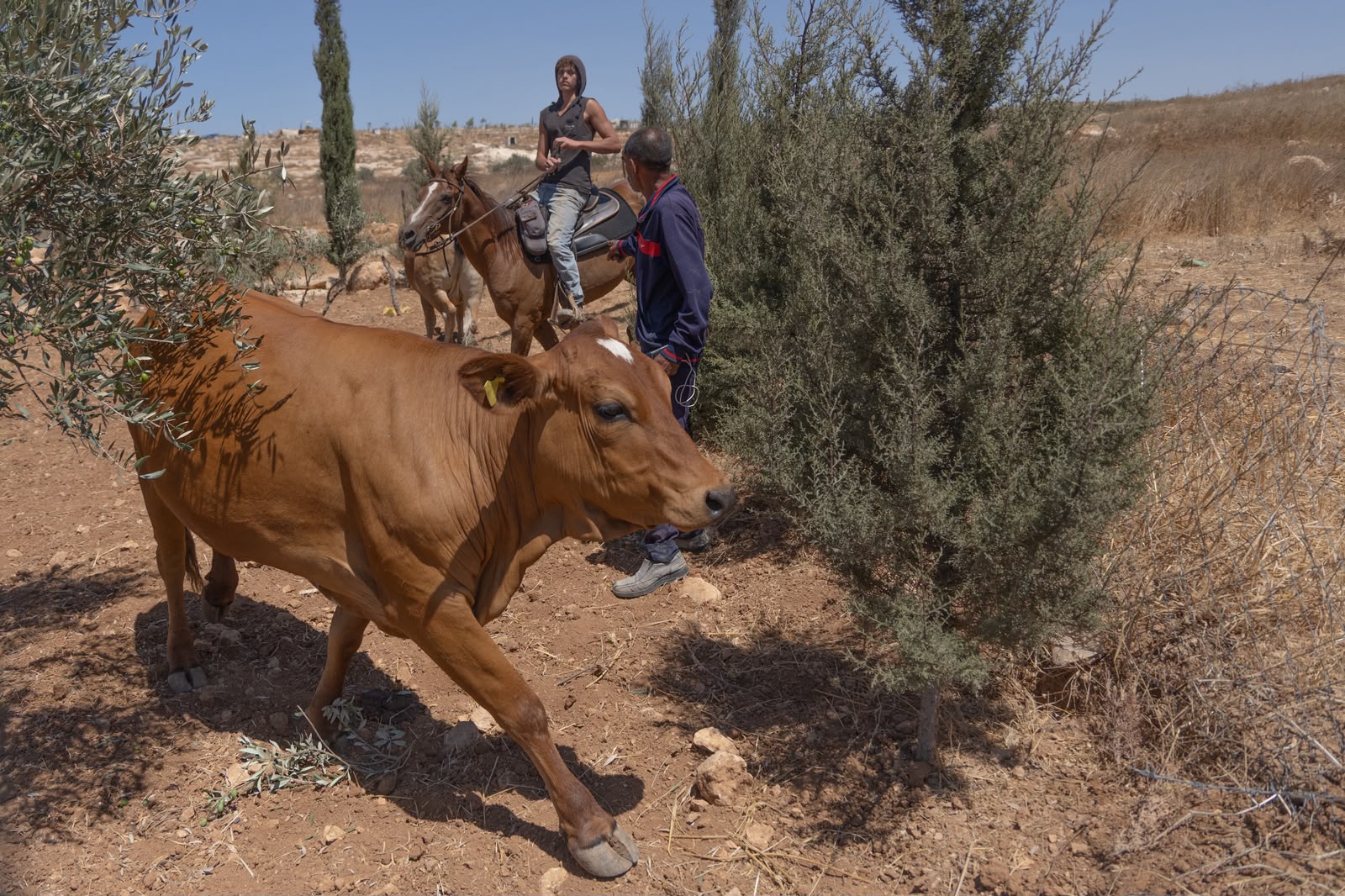
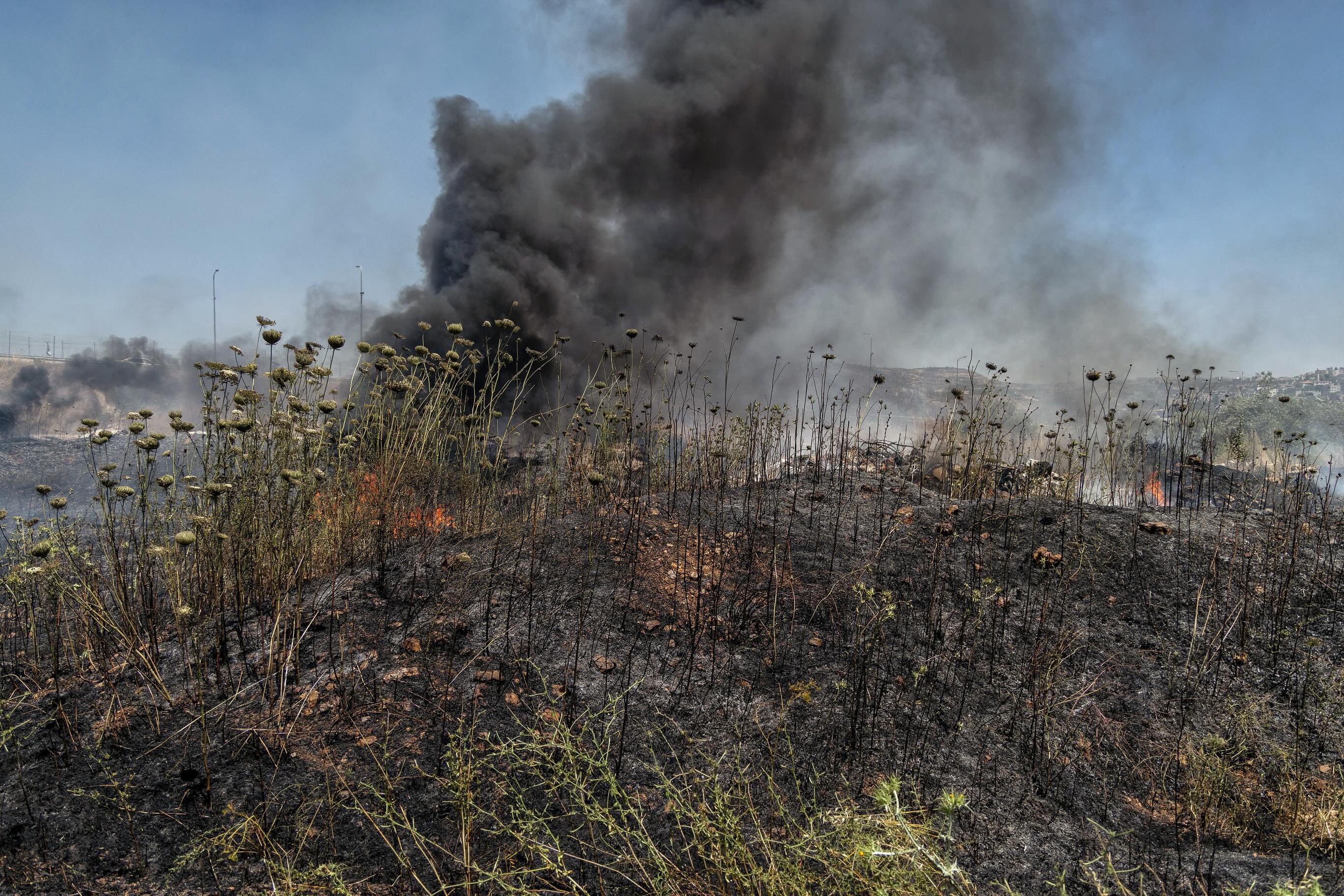
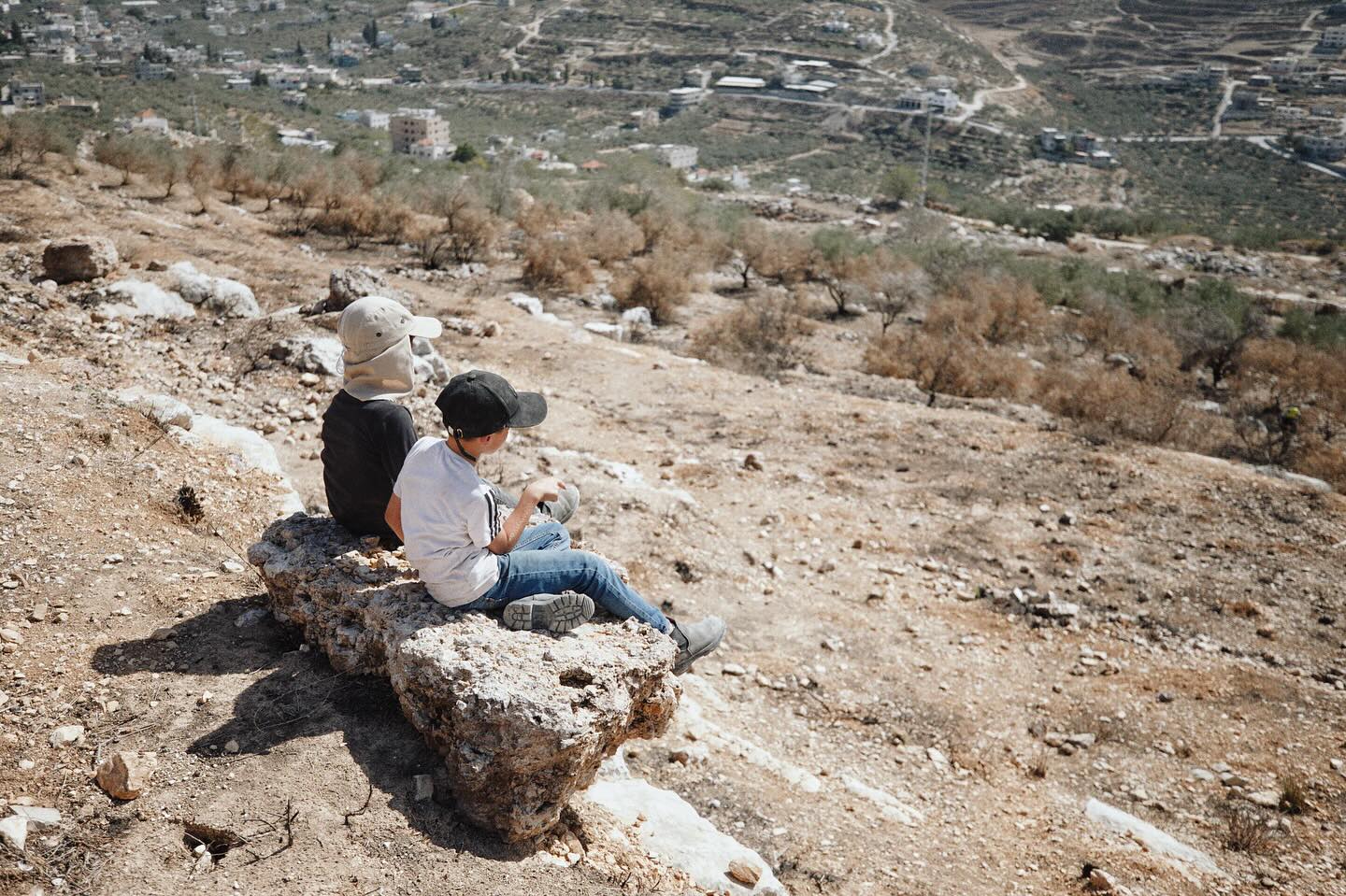
In Nablus, the city where I grew up, I have witnessed the myriad ways a family can be dispossessed. In Beit Imrin, northwest of the city, Israeli forces blew up the family home of political prisoner Dawas Hassoun. Afterwards, I photographed the rubble. Inside the neighborhood of al-Taawun, I watched Israeli bulldozers tear down two homes where more than 20 people lived. The reason given: the homes stood in Area C. A few hundred meters away, a new settlement outpost continued rising, untouched. In Huwara, south of the city, settlers terrorized the community daily, stealing livestock, attacking farmers, and setting acres of land on fire. I have gotten used to photographing parents weeping for their children. But in Huwara, for the first time, I photographed a man weeping for his sheep.
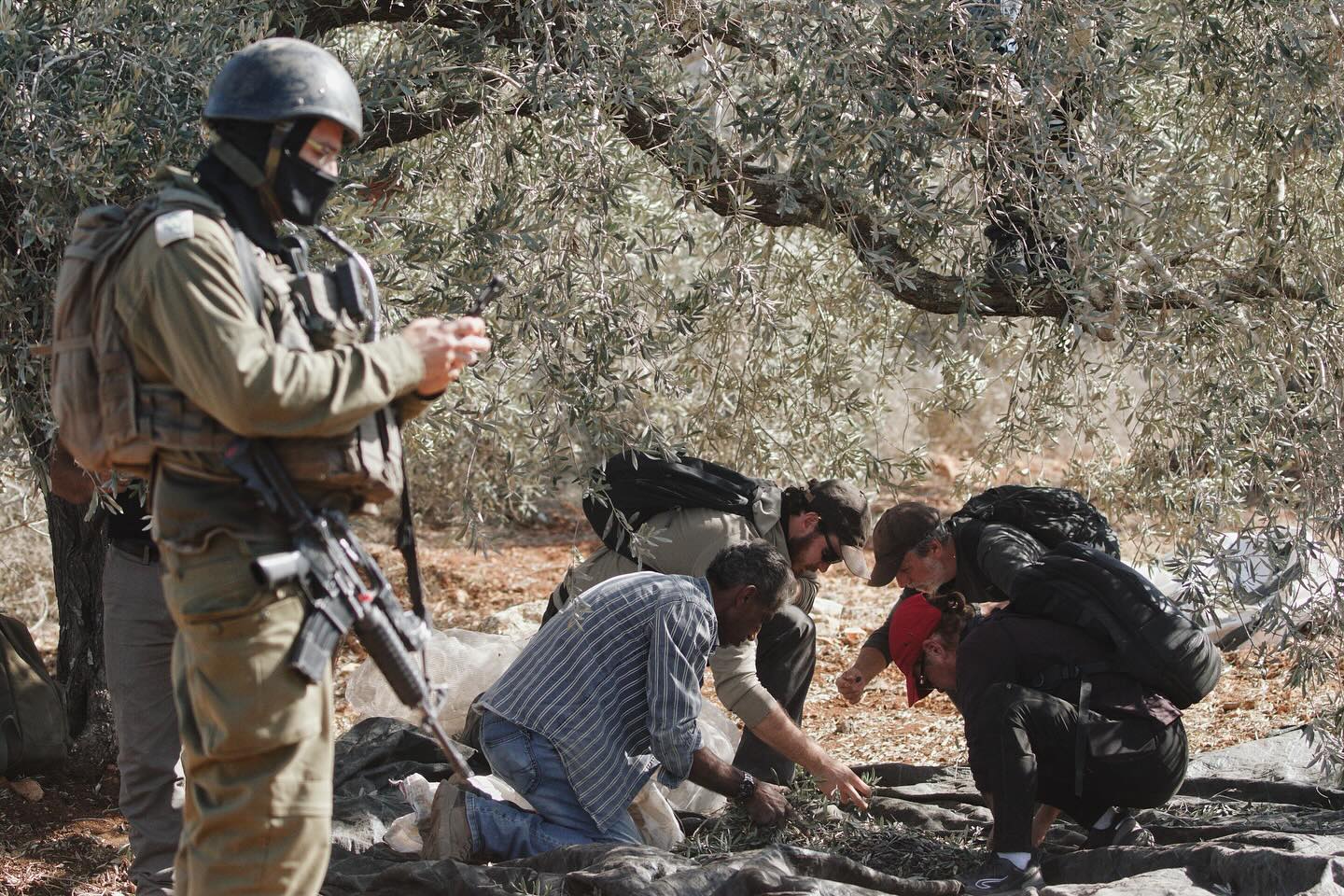
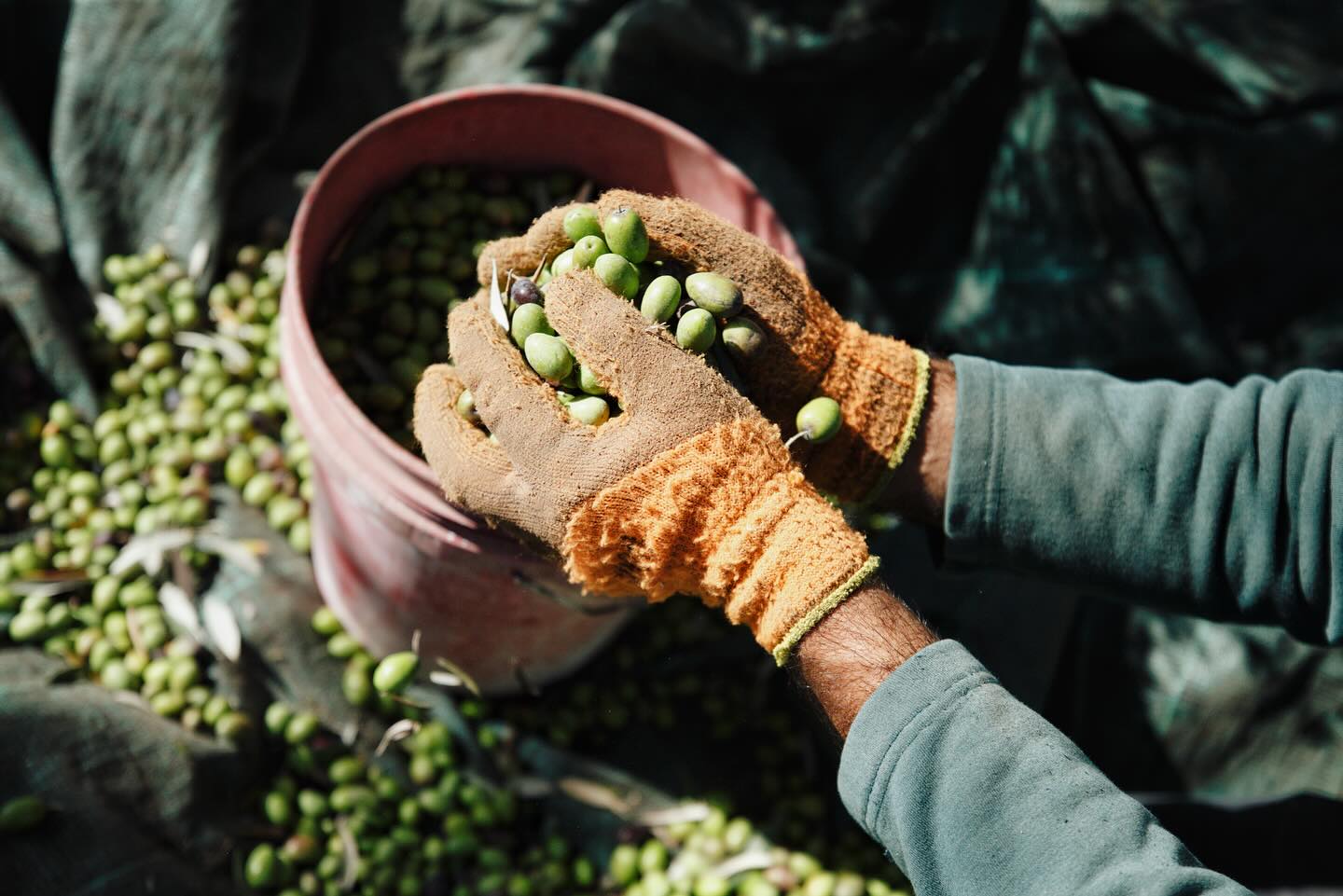
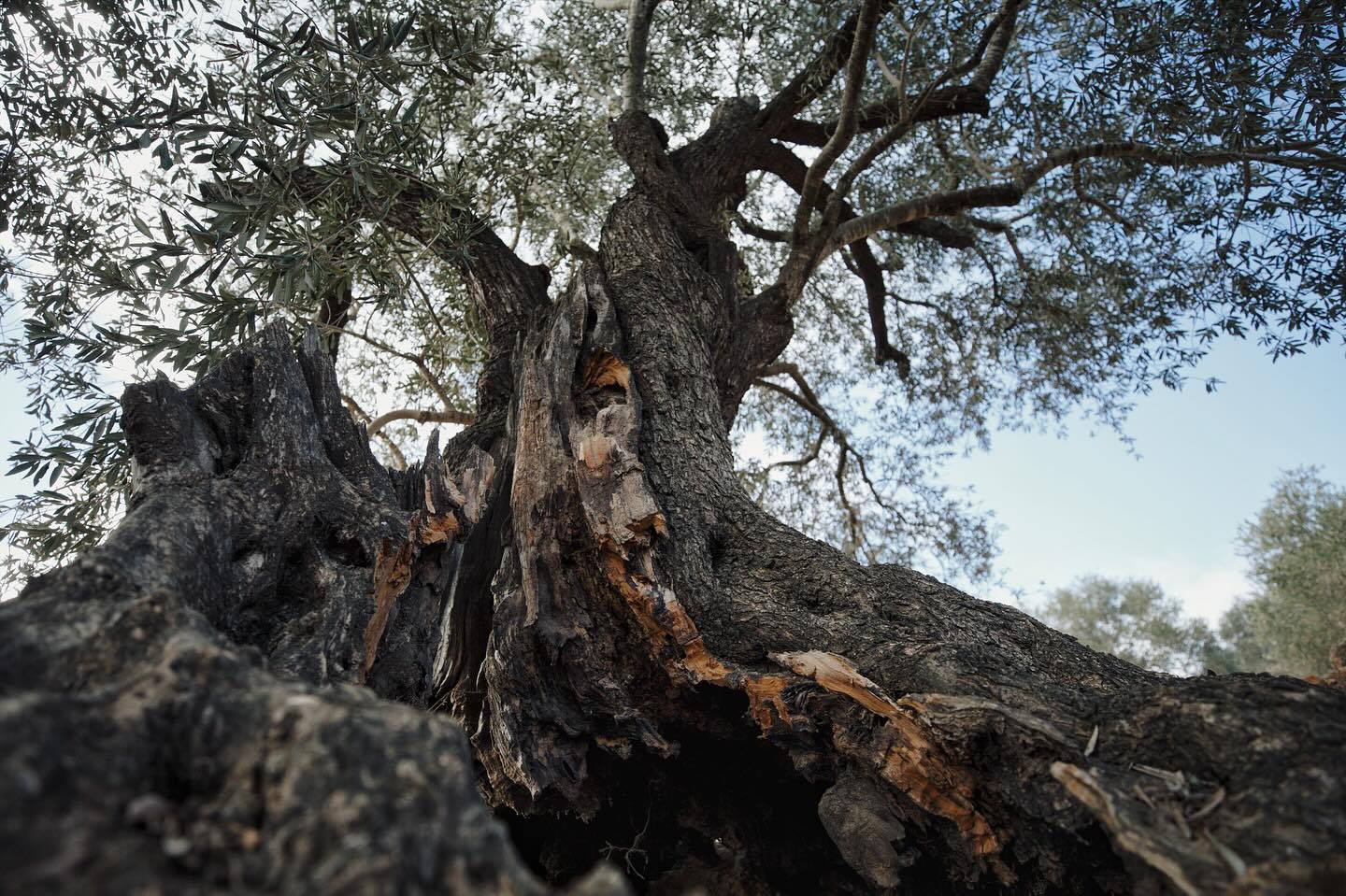
The olive harvest is not just an agricultural season; it is a yearly reunion with the land, a memory passed down from parents to children, and the livelihood of many Palestinian families. In recent years, it has become a season of blood. I have seen blood shed for a tree, for a piece of land, for a memory.
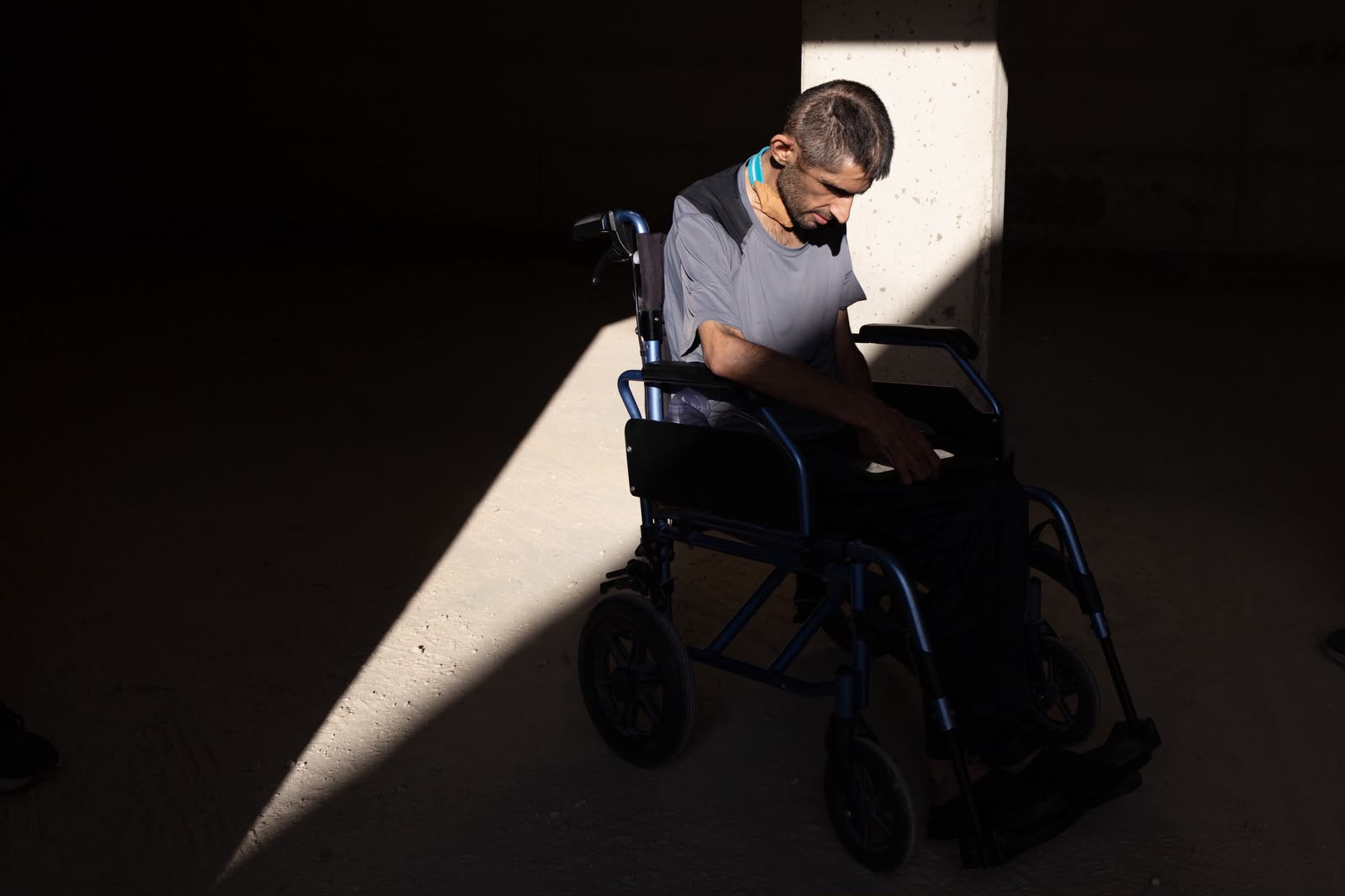
In Gaza, journalists have paid the ultimate price. Here in the West Bank, many of us are paying it slowly. Detention was always a story that seemed to happen to other people, until it took my cousin, the journalist Mujahed Bani Moufleh. Israeli forces abducted him from his home in Beita and held him in administrative detention for seven months without charge. Soon after his release, he suffered a massive brain hemorrhage, which doctors linked to the starvation and medical neglect he endured inside. He spent seven months unable to speak. He told me prison had erased all his children’s faces from his memory but that of his youngest, Arab, who was three years old when he watched occupation soldiers beat his father during the arrest.
He is not alone. Ali al-Samoudi, 67, came home from a year in detention weighing 60 kilograms, half his weight when he was taken. Somaya Jawabra, arrested while seven months pregnant, has spent more than two years under house arrest, barred from working or even using a phone. Freedom, I have learned, is not the end of suffering. Sometimes it is only the beginning of a different battle.
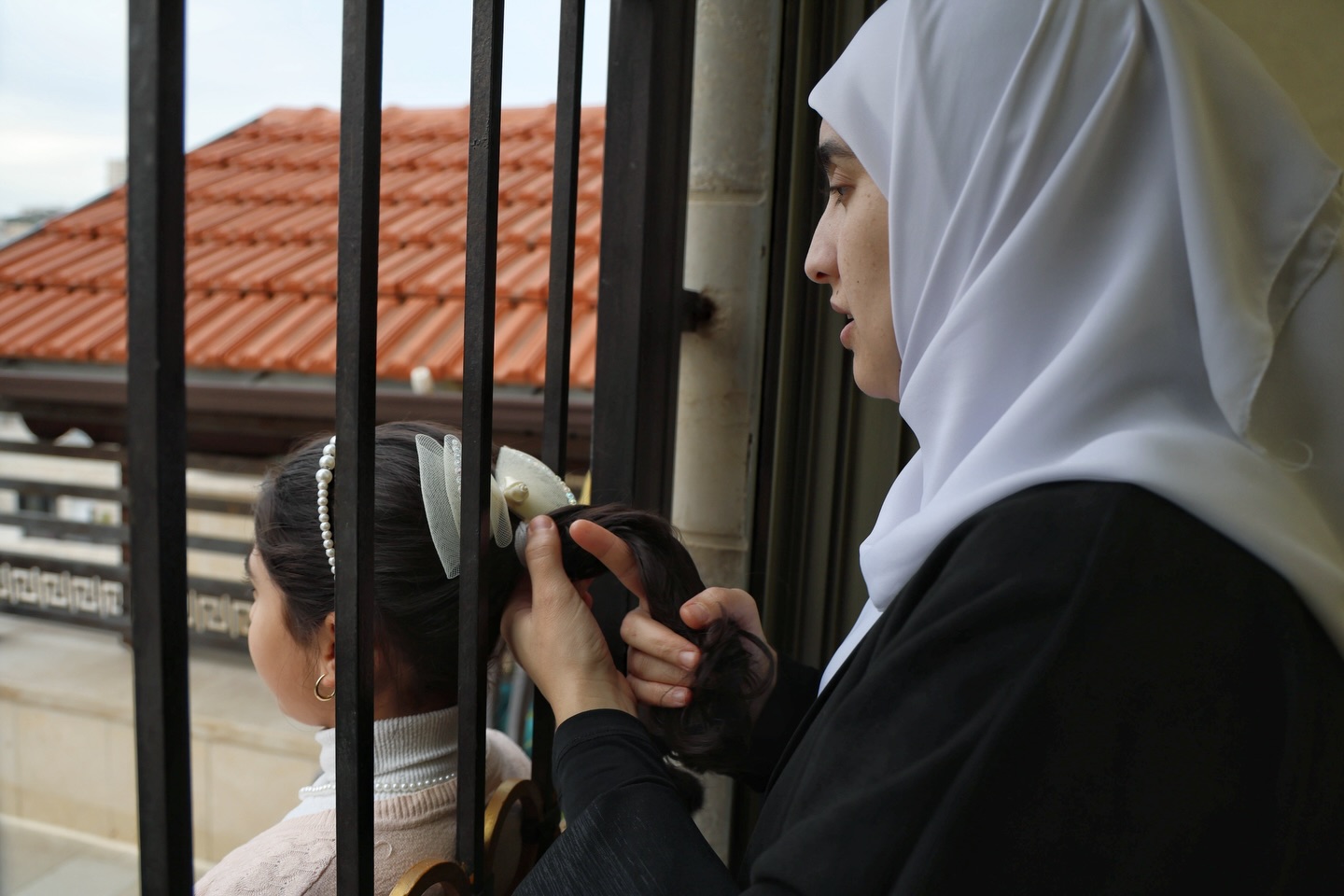
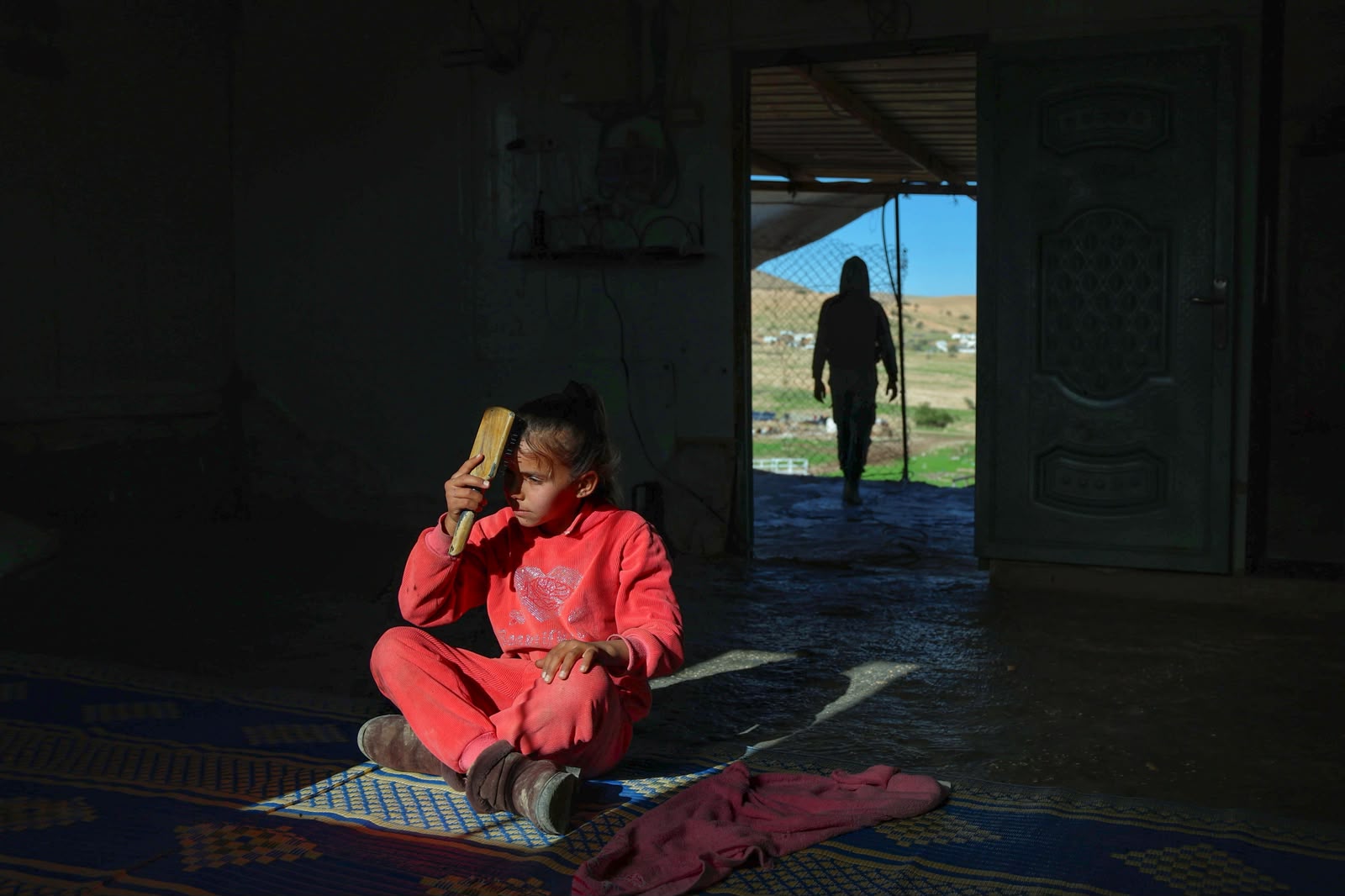
Ras Ain al-Auja was one of the last Bedouin communities left in the Jordan Valley. In January this year, settlers cut it off, destroying the roads and barring food from reaching people and animals. While I was reporting there, a settler tried to unclip my camera from its strap. He was wearing a stolen keffiyeh and grazing his sheep on land that wasn’t his. Before her family fled, I asked 12-year-old Nahla Ahmad Trefat to tell me: If she could do one last thing in her home, what would it be? I expected her to mention a special toy, a piece of clothing, something to carry with her. Instead, she said, “I want to comb my hair.” Her words stayed with me. I had expected a more elaborate response in the face of such a life-altering event. Yet, Nahla distilled all the displacement, killing, settlement expansion, and demolition operations in the Jordan Valley into a child’s simple desire to do something ordinary in her home — perhaps for the very last time.
Wahaj Bani Moufleh is freelance photojournalist from Beita, in the Israeli-occupied West Bank. He is a member of the Activestills collective and a digital media student in American Arab university. You can find his photopgrahy on instagram @Wahaj_Bani_Moufleh
This piece appears in the twenty-third issue of The New York War Crimes.