

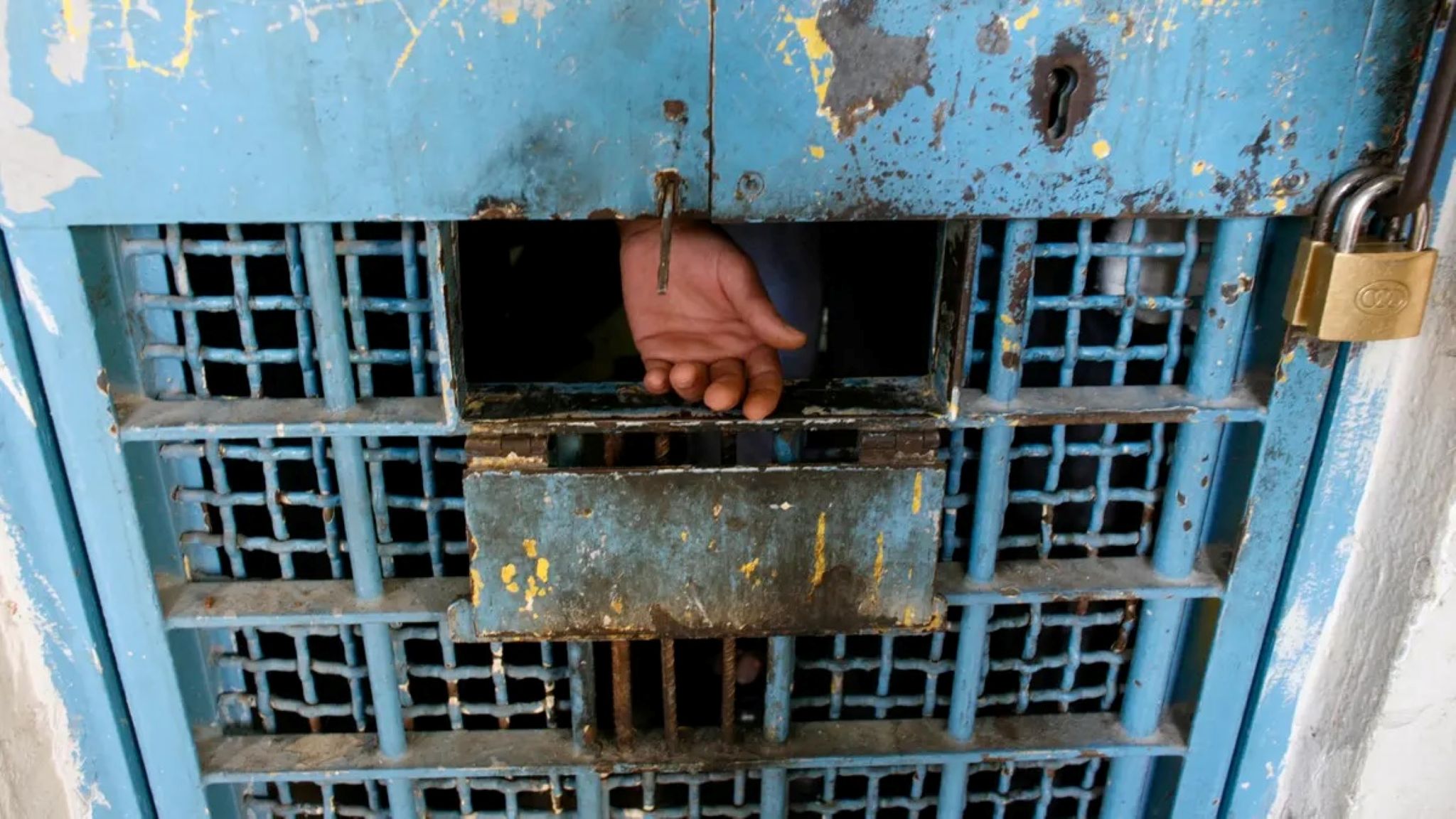
Time, and the language of time in prison literature, is the same as it is everywhere if we adopt the “clock” as its only measure. In captivity, time loses its numerical value; it becomes a feeling, a deep awareness of the self and of the other. It weighs heavier upon the prisoner’s shoulders due to the multiplicity of small and large responsibilities that constantly change, as a result of the continuous confrontation with the occupier. This article addresses the possibilities of transcendence in prisoner literature and attempts to answer the persistent question of temporality in prison, and how time manifests in the life and writing of a Palestinian prisoners. It relies on personal experience as primary material to shed light on the temporal dualities experienced by Palestinian prisoners as they continue their individual and collective struggle for liberation before prison, in prison, and after prison.
It is true that time in life is a philosophical category that may intersect in one way or another with time in literature, which itself fragments into multiple categories of time (astronomical, historical, psychological, physical, philosophical...). With the succession of civilizations, time came to be confined to the triad of past, present, and future, meaning that it lies on a horizontal plane. In other words, human beings determine their temporo-spatial position from their present, which they live and feel, and they return with their memory to the past, while the future for them is an unseen time that humans, from poets to princes, place in the third rank. Since the beginning of the twentieth century, time has moved beyond its own problematic, as it does not exist except through human experience.
When we think about the duality of time and place, we become certain that colonialism always seeks to freeze time in the lives of its victims, and we Palestinians are no exception. The exception is that Zionist colonialism has sought, and continues to seek, to freeze Palestinian time in order to achieve the equation of Judaization and Israelization. If we take the prisoners as a model, we find that Zionist colonialism works relentlessly to freeze time in our lives in order to transform it, and us, into a heavy burden on our world, our people, and our cause. From a profound understanding of this very point, many prisoners have persistently dug an intellectual and literary tunnel with their pens, through which they liberate prison time from the grip of the occupation and present to the world a vision of Palestinian steadfastness by declaring sovereignty over time as an inevitable step toward achieving sovereignty over the land.
If we fail to grasp the nature of this conflict, the will, burdened by political conditions that prevent us from making history, will remain constrained, allowing our adversary to impose upon us their own narrative. For occupied time can only be ruptured through revolution, and revolution requires a liberatory national movement capable of leading and directing it. So what happens when occupied time shatters between the hands of competing organizations who struggle over its illusions? In this context, literary and cultural production inside prison is a victory for the prisoner, his people, and his cause. It is a declaration of his sovereignty over the time stolen from him, just as the cry of every newborn who comes into life from the womb of every Palestinian fighter, who turned her womb into a revolutionary base for launching toward a better future; every newborn conceived through the smuggling of sperm, just as the prisoner Walid Daqqa fathered his daughter Milad from his wife Sana’ Salameh.
How could it be otherwise when the prison is an extremely narrow space? Imagine, for example, that you live with about one hundred and twenty prisoners in the cell block, whose area is slightly more or less than three hundred square meters, and that you remain in the same cell for many years with at least five other prisoners, inside a rectangle seven meters long and three meters wide. Figuratively, this is your entire house (it contains the bedroom, the kitchen and its tools, the dining table, the living room, the bathroom, the shower, the chairs and table, the belongings of all its residents, cupboards, the sink, the trash bin, and the clothesline...). Your private space, therefore, does not exceed two square meters, and you must carry out your life, all social, human, and organizational activities in this space without infringing upon others.
To succeed in doing this, and to overcome all forms of conflict and crisis that may occur between people, especially when they are crowded into such a narrow space, prisoners must rely on shared values and internal understandings. Such is a victory over the place designed to defeat you, even if the jailer ultimately retains the upper hand.
Thus the most mature form of victory for prisoners lies in employing time in their favor by declaring sovereignty over it, obviating the jailer’s domination through continuous rebellion and confrontation. Despite the physical price and harm they endure, they feel the ecstasy of freedom.
Hussam Shaheen survived 21 years in Zionist prison before his release in February 2025 as part of the negotiated prisoner exchange.
This piece appears in the twentieth issue of The New York War Crimes.
Sign up for updates on the Freedom for Palestinian Prisoners campaign here, follow the campaign here, and take action here.