

Fridays on Tel al-Baten follow a routine. After the noon prayer, hundreds of Palestinian men begin to gather on the hill. Small groups of scouts clamor up the hill and run back down to report what they’ve seen to the mayor and local elders.
Tel al-Baten overlooks the small Palestinian village of Sinjil, which is a crucial junction connecting Ramallah and Jerusalem to Nablus and the northern occupied West Bank. Even though much of the mountainous region lies in Area A, which is ostensibly controlled by the Palestinian Authority, a group of Zionist settlers calling themselves the “Hilltop Youth” have established an outpost there, in violation of an Israeli court order, from which they terrorize Sinjil and its farmlands.
The settlers camp at the peak of Tel al-Baten. Every Friday, the Palestinians come to protest, and every Friday the settlers charge. In mid-January, I joined them.
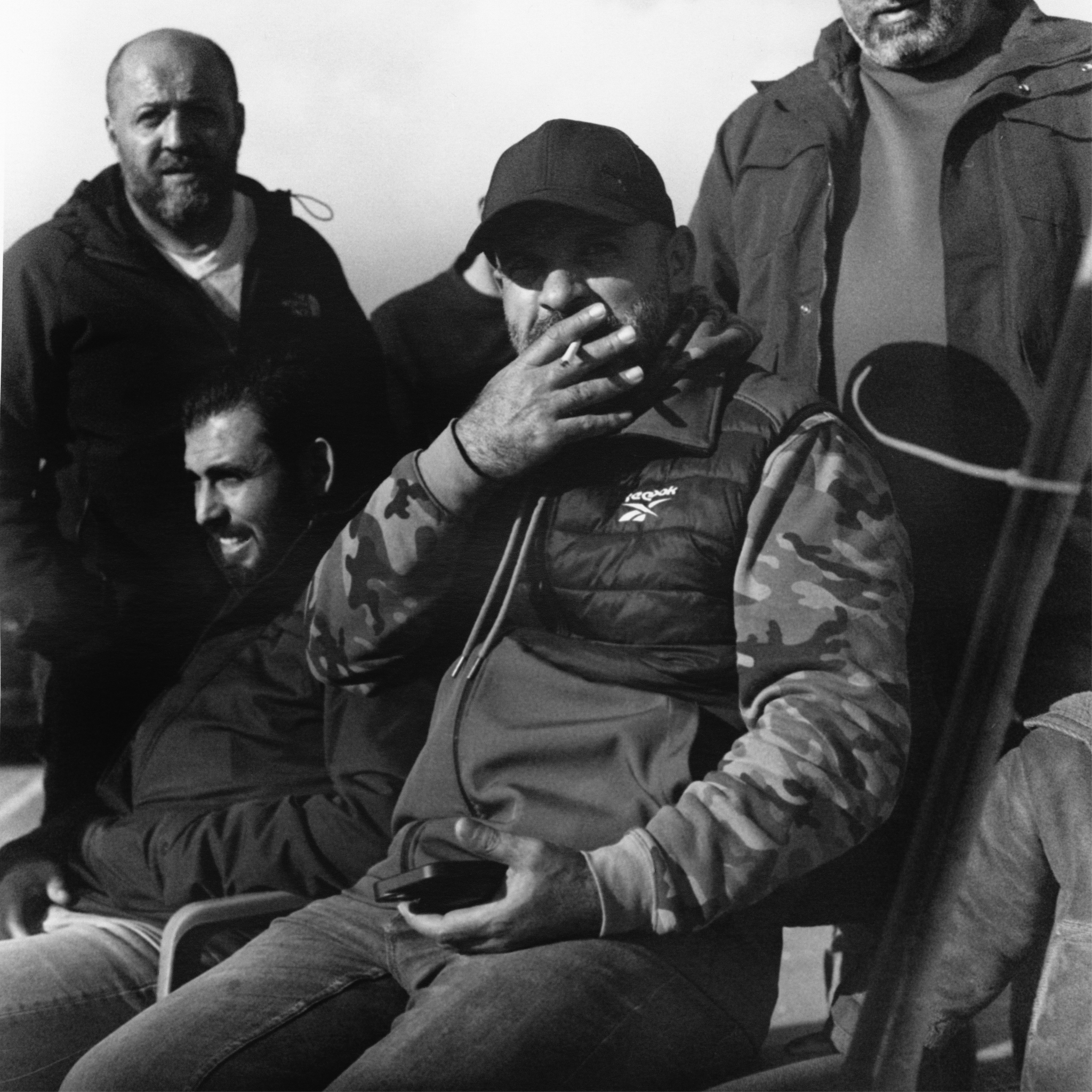
Before the climb up to Tel al-Baten, Sinjil mayor Dr. Motaz Tafsha instructed the young men to engage the settlers only if they attacked first. Wearing a camouflage patterned hoodie and a gray baseball cap, he told them: “We protect our homes, never attacking. We only fight defensively.”
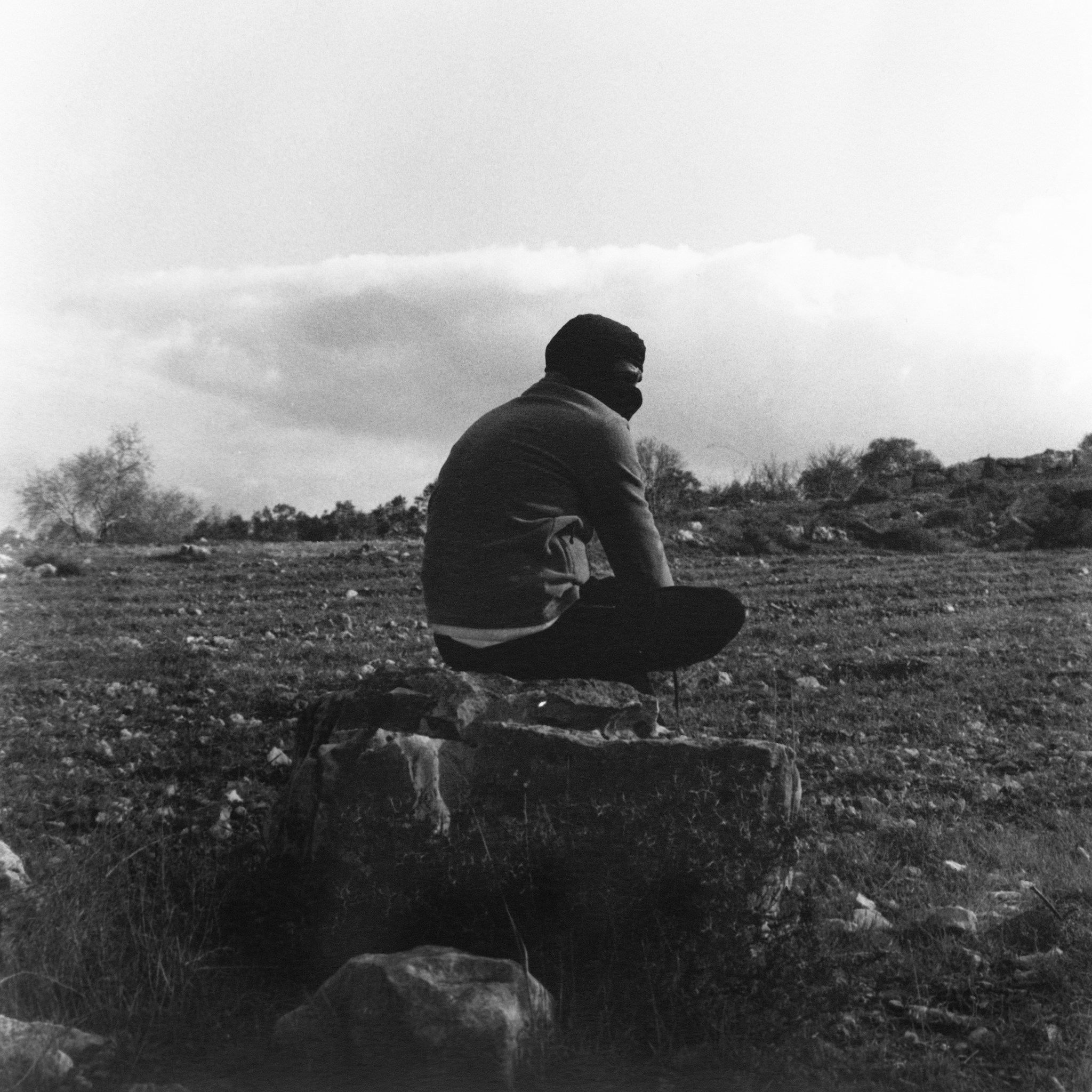
A group of five or six boys, clad in Adidas track suits, balaclavas, and hoodies pulled tight around their faces, led the way with the confidence of experienced men.
The mayor ordered the boys to form makeshift barricades with boulders and rocks.
A Palestinian teen started a fire, which burned clear in the brush behind the road. The settlers came as anticipated, jumping out of a silver sedan — one that local Palestinians had come to associate with unarmed teenage settlers. The sound of a settler’s fireworks drove some of us for cover as others threw rocks at them. They threw rocks back.
The settlers shouted at us in Hebrew. The Palestinians who understood shouted back: “Ben-Gvir is a motherfucker!” Despite the volume of rocks thrown, not a single person on either side was hit. One of the men from Sinjil lugged a stick with around a dozen fireworks attached to its end towards the settlers and fired at them. The smell of gunpowder clogged the damp air.
Before anybody could land a punch, a Jeep appeared on the horizon. The people of Sinjil knew: The settler who drove this Jeep was armed and dangerous. The mayor shouted for retreat and in an instant everybody sprinted down the mountain. To the west, the Tel Aviv skyline glimmered in the sunlight.
A village fights alone
I arrived in Sinjil in mid-January. The 20-mile drive from Ramallah took three hours because of traffic and Israeli checkpoints. The village rises steeply among rolling hills, boxed in by a 15-foot-tall security fence of razor wire and surrounded by illegal settlements. The tight grouping of mostly ancient homes are built on terraces that date back millennia.
Since October 7th, settler violence has escalated in Sinjil and across the occupied West Bank, but the conditions for the village’s dispossession were established long ago.
In the decade that followed the end of the Second Intifada in 2005, the then-nascent Palestinian Authority, which administers Area A and has civil control over it, and the Israeli military dismantled most political organizations in the occupied West Bank, relegating political activities to the few remaining spaces authority could not reach, like Telegram channels and universities.
Contemporary resistance on the ground in the occupied West Bank has transformed from a coordinated militant struggle where local offices had national partners to call for support, assistance and reinforcements, into a delicate balancing act by small municipalities, which defend themselves in near isolation against waves of settler attacks. Push too hard and severely injure or kill a settler, and your village will be sieged or destroyed. Don’t push at all and your village will be enveloped into the ever-growing network of settlements encroaching on Palestinian land.
Sinjil finds itself defending its land in a time of severely weakened armed resistance and political formations as well as the relentless escalation of settler violence and land grabs.
Since spring 2025, settlers have razed and occupied dozens of homes around the southern neighborhoods of Sinjil. Their menacing presence on Tel al-Baten has prevented Sinjalawis, many of whom are farmers, from working their land. One of the village’s best-known restaurants has begun serving its hummus dry: Settler attacks prevented farmers from pressing sufficient oil from the recent olive harvest.
The violence in Sinjil peaked on July 11, 2025. During the weekly protest after Friday prayer, around a dozen armed settlers confronted the protesters, who were joined by several foreign activists, atop Tel al-Baten. Settlers encircled and beat them with sticks and rocks, before other settlers on four wheelers chased the group, forcing it to split up. In the chaos, Mohammed Shalabi and Saif al-Din Muslat followed a trail deeper into the hills, rather than one back down to Sinjil.
Shalabi’s body was found under an olive tree, shot dead. A few miles away, al-Din was found, barely alive. He was pronounced dead that evening at a hospital in Ramallah.
A novel defense network
The part of the mountain where the men were killed is part of Area A under the 1993 Oslo Accords. The Palestinian Authority controls internal security and civil affairs in Area A. In Area B, it controls only civil affairs, and Israel controls security. In Area C, Israeli Occupation Forces have full control.
Yet it was Israeli authorities that argued to remove the settlers and their outposts in August of 2025, after a petition by Palestinians. An Israeli division commander wrote that “lawbreakers” had illegally opened roads and occupied Palestinian homes. Months later, the outpost remains, settler attacks continue, and Sinjawalis cannot access their land without the threat of violence.
This is the situation Sinjil finds itself in. Even under Palestinian control, it is Israeli troops who patrol with guns and a petition to the Israeli court that locals cling to for their rights.
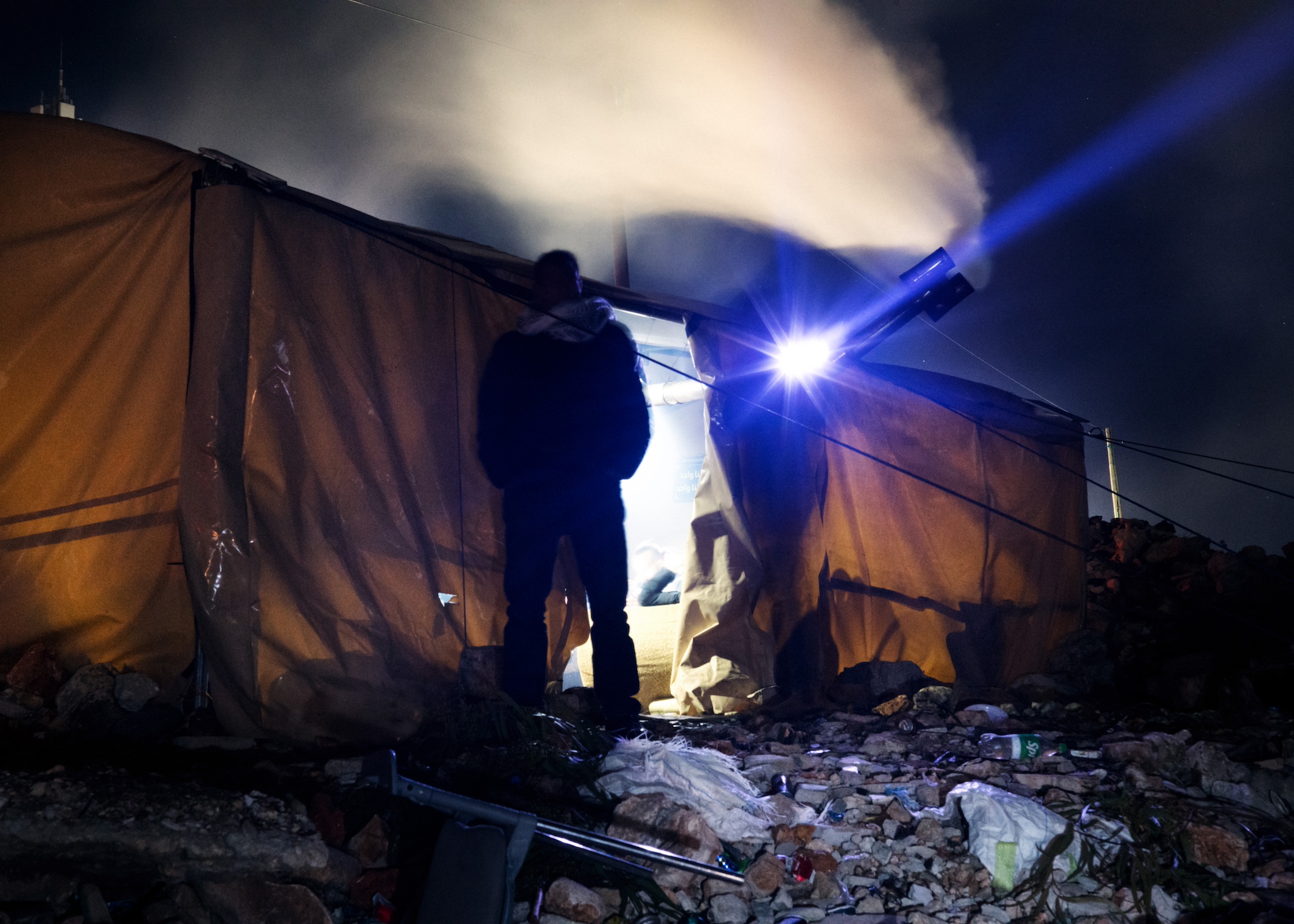
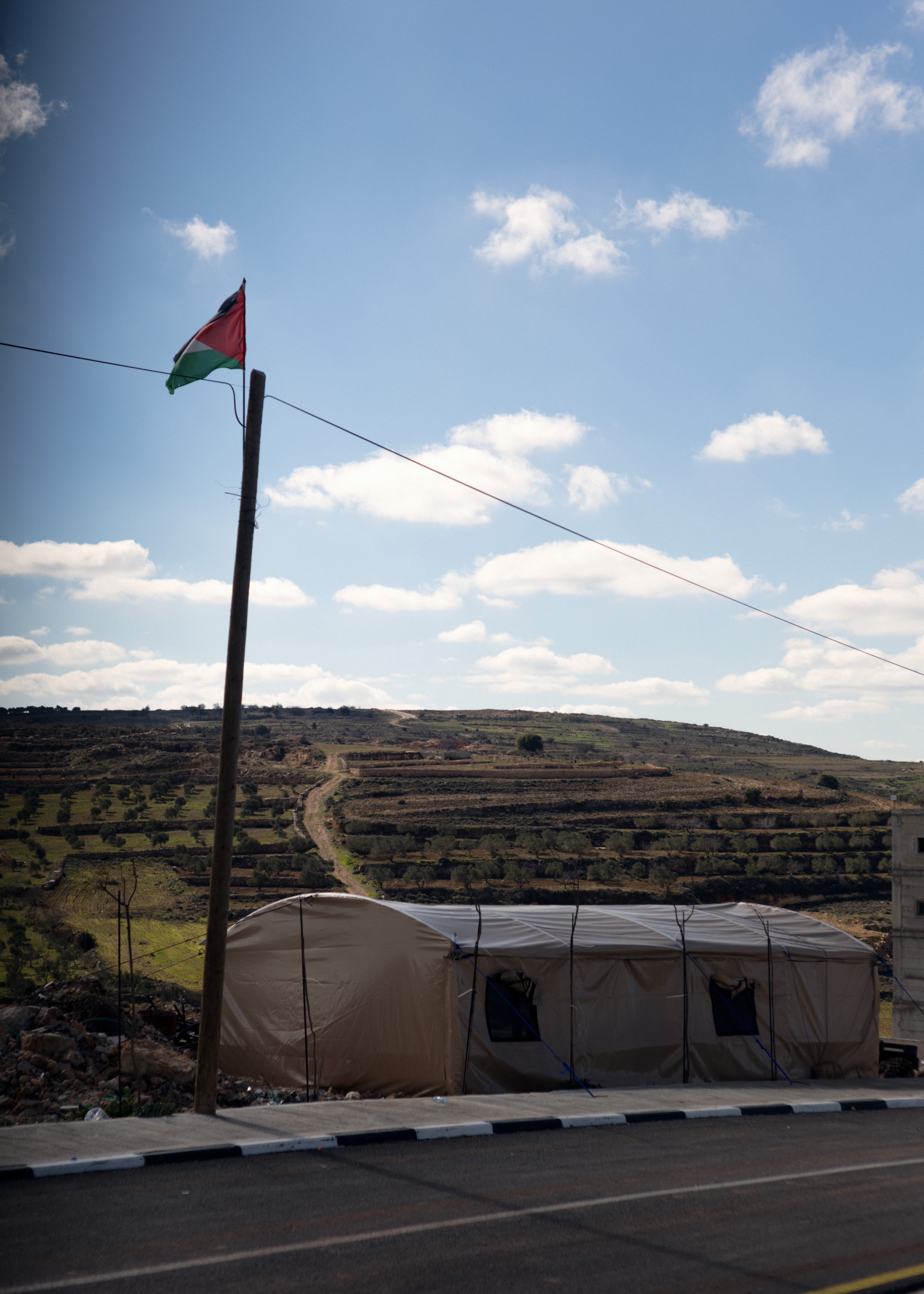
In response to the continued presence of settlers, the villagers of Sinjil have organized a novel defense network in the area. Opposite the settler outpost atop Tel al-Baten, Sinjawalis set up a security station in the form of a tent. Inside the tent, a few dozen men sit around a handmade stovepipe brewing coffee and talking. Some of them are young, joining the contingent straight from school or work. Others are older, huddled heads of black and white kuffiyehs, and drink their coffee quietly. A no-man’s-land, strewn with animal bones, boulders, and shouk, is the only thing that separates the Palestinian camp from the settlers.
Every few minutes, one of the men leaves the smokey atmosphere of the tent to brave the cold. Standing atop piles of coffee grounds and hundreds of empty energy drink cans, he traces the ridge with a high-powered flashlight, looking for changes in the landscape of rocks, abandoned structures, and rows of olive trees.
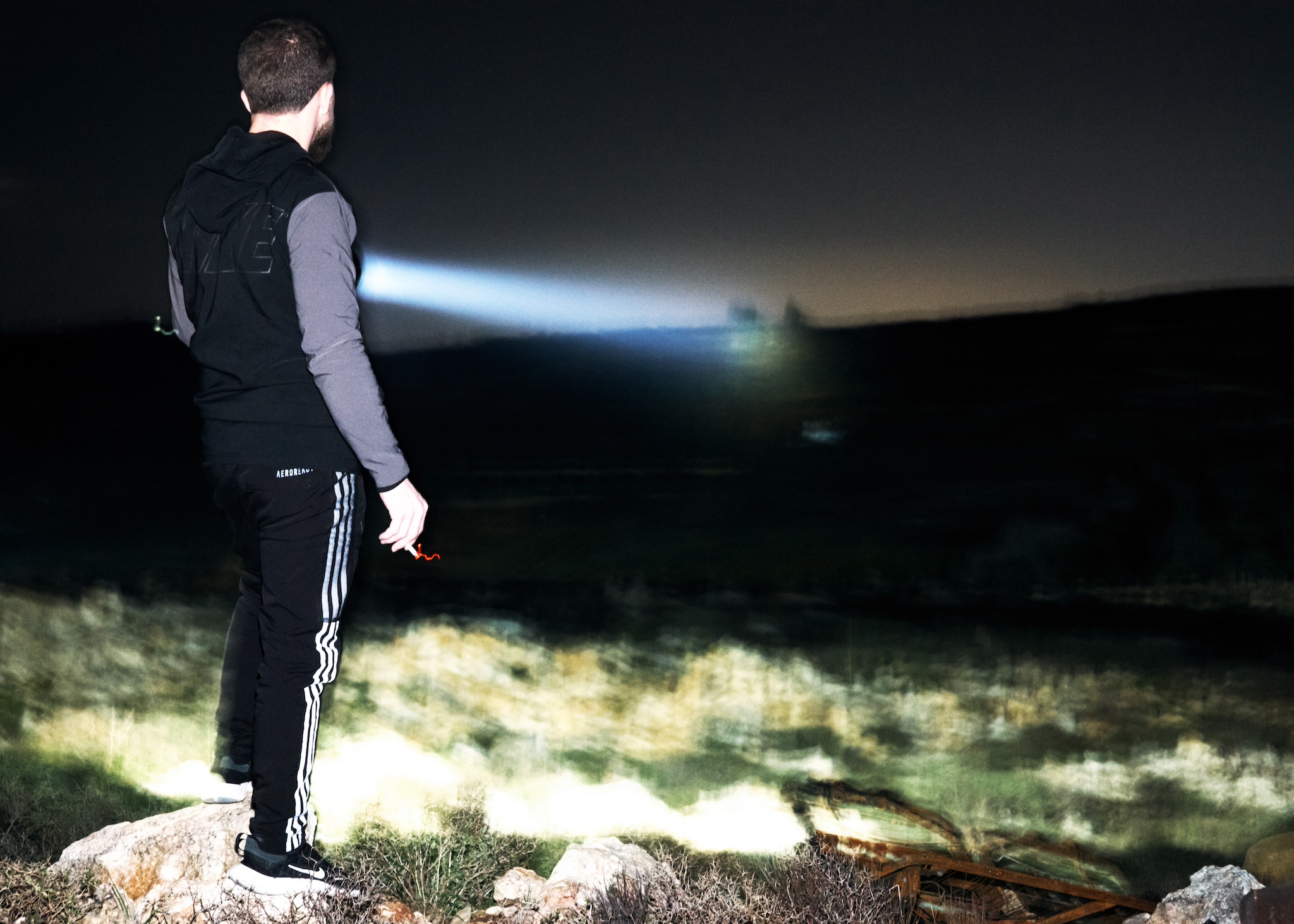

Oftentimes, a green laser crosses perpendicularly to the beams, signs that some of the men in Jiljilyya, to the southwest of Sinjil, are keeping watch too. An orange blinking light on the hill across from us confirms that something is going on, but the men in the tent aren’t concerned. They press back into their outworn chairs and await the presence of Israeli soldiers on the hill: “Ahlan wa sahlan.”
Since they set up their night watch in spring, this group, who call themselves “the protectors of the land,” have men at the ready in the tent, 24 hours a day, seven days a week. They spend the nights checking the ridgeline to make sure settlers, emboldened by the cover of darkness, aren’t pushing an attack. The settlers call themselves “the monsters of the mountain,” but one of the watchers says “they’re more like rabbits.” Since the tent has gone up, the watchers have been able to successfully deter further attacks on the southern area of Sinjil.
Sometimes settlers will try to sneak up to the tent, but the men reassure me that hundreds of Sinjalawis assemble within moments of a warning text going out and the settlers retreat before they can do any damage. After months of studying their enemy, the watchers can identify exactly which settler is which and if they pose a serious threat just based on the color of their cars. Violence in the occupied West Bank is extremely intimate.
The days bleed together
Back at the base of Tel al-Baten in January, IOF Jeeps approached. The settlers called them even after the Palestinians of Sinjil retreated down the mountain. Only a dozen of us remained outside the tent when the soldiers jumped out of their Jeeps and charged their assault rifles in metallic sync.
The leader of the patrol walked down the line of Palestinians and pointed at four teenagers, seemingly at random.
The boys were made to put their hands on the hood of the soldiers’ cars and spread their feet wide as instructed. Soldiers patted them down and placed their items — cigarettes, phones, lighters, prayer beads — on top of the car.
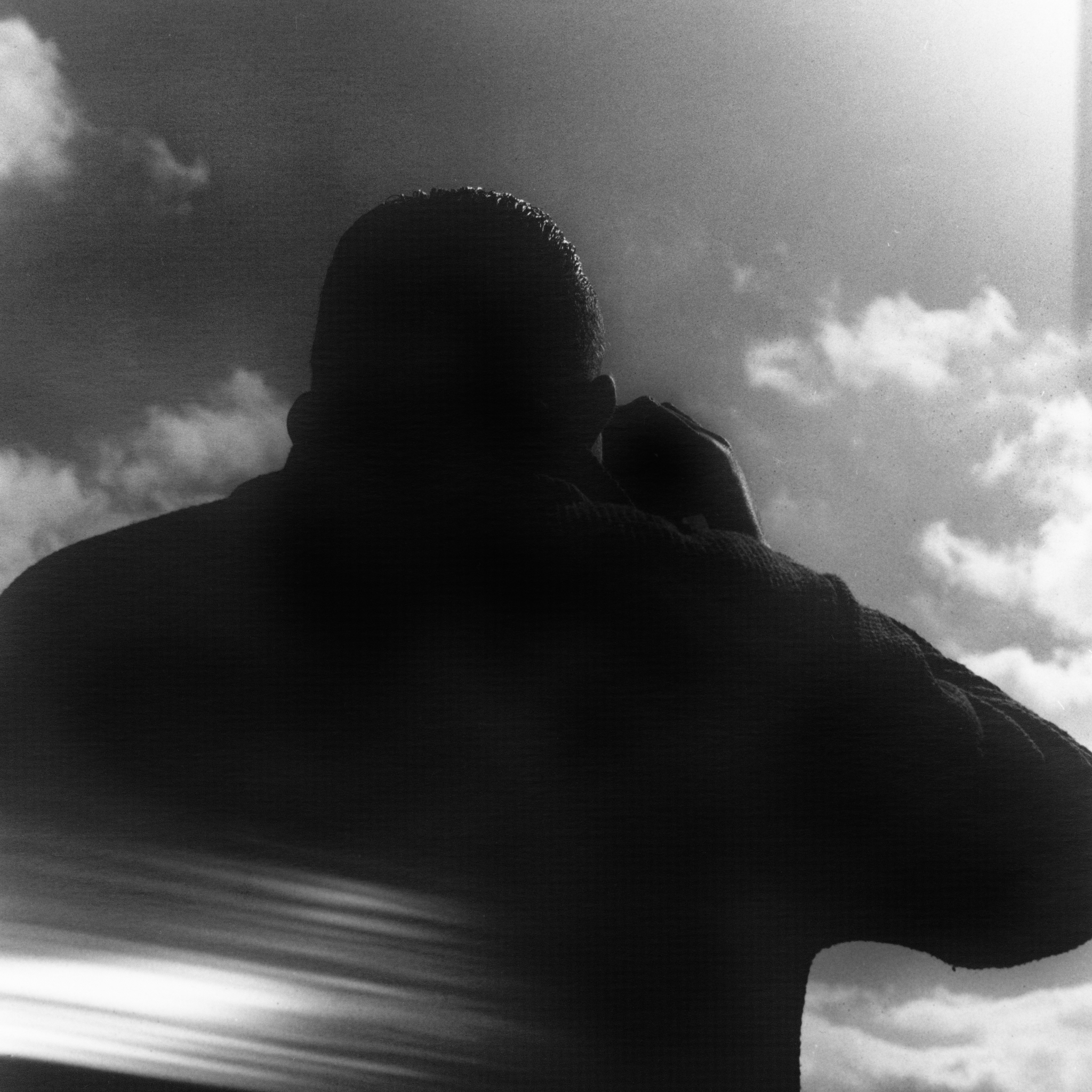
One of the Palestinian men yelled at the main soldier, David, in Hebrew. He waved a stack of papers in the air: the Israeli court order that forbids settlement on this land.
After a short back and forth the soldiers released the four boys and drove off.
Next Friday, it will happen again. The settlers will charge, the Palestinians will fight back, soldiers will detain, court orders will be waved around. The sons of Sinjil, armed with rocks, binoculars, cameras and the strength that comes with having no choice, will risk murder, beatings, and imprisonment to defend their land.
This piece appears in the twenty-first issue of The New York War Crimes.