

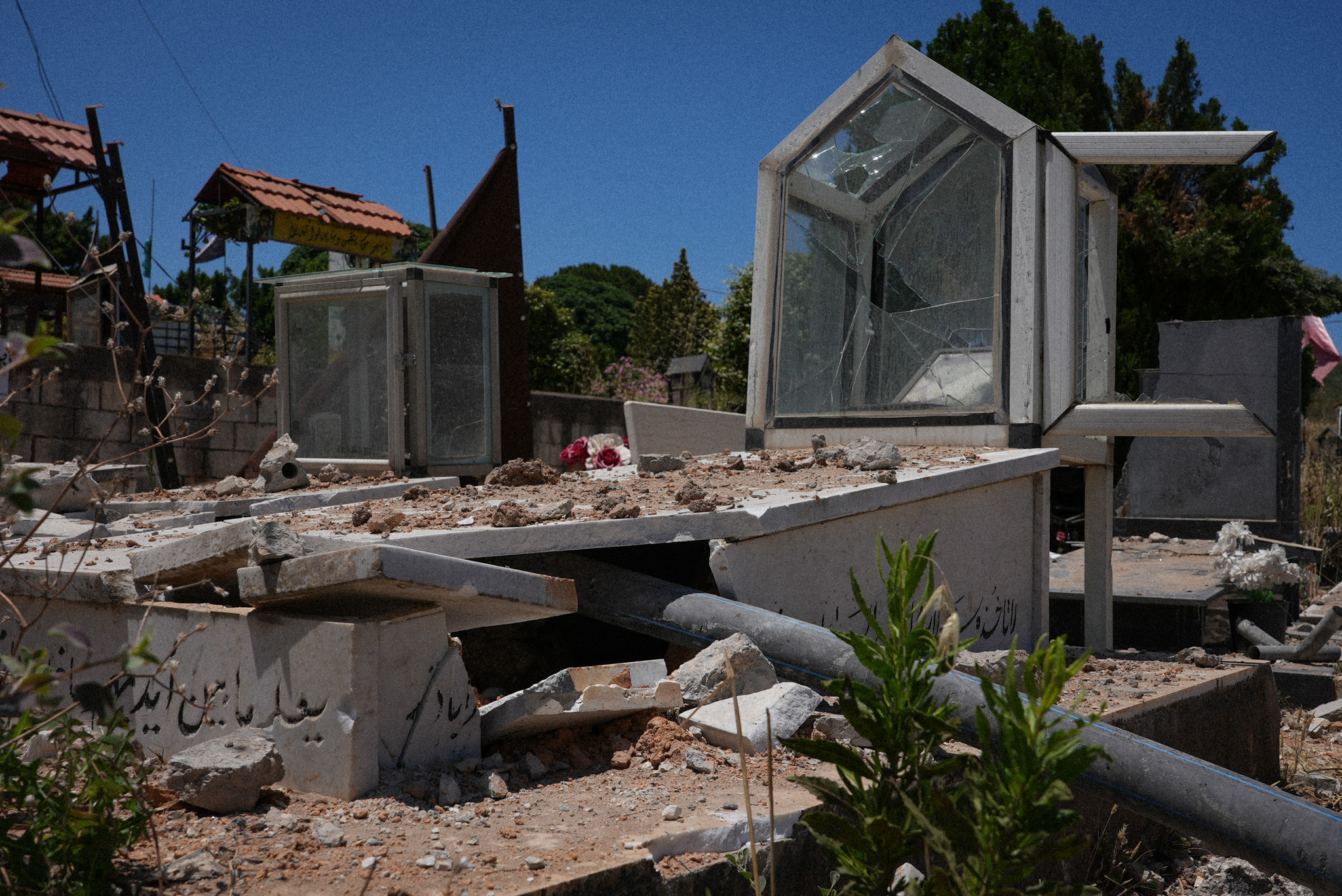
Did they bulldoze my father’s grave? They bulldozed the entire cemetery, with all the graves in it. My father’s grave is in a corner, near the graves of my grandmother, my grandfather, my uncle, my father’s uncle, and his dear friend. It’s not far from the graves of his grandfather, his uncle, and his martyred cousins. Perhaps that corner survived the bulldozing. Perhaps. In the aerial image, they bulldozed the entire cemetery. But the acacia trees are still there. There, south of Yohmor al-Shaqif, near the water reservoir. Beneath the acacia trees, they bulldozed the graves.
“The quiet graves” — that’s what I would have written. For what are graves if not stillness? Graves beneath the acacia trees, near the reservoir. What threat do they present to an army bristling with nuclear weapons? They are the graves of my father, my grandmother, my grandfather, my uncle, my great-grandfather, my great-uncle, my brothers-in-law, my father’s friends, my aunt’s husband, my other aunt’s husband ... the graves of our people, our martyrs, and their ancestors. How does a D9 bulldozer enter a cemetery and raze it? Is there a reason? What could it be?
I will not speak about those who are buried in these graves. But the first thing that crossed my mind was the ghost of my grandmother. Did she frighten them? Her name was Latifa, and she was gentle, like her name. In the 1980s, electricity reached the village only on special occasions. My grandmother would wake at dawn, just before the morning dew. She would carry a lantern and step out onto the porch, toward the edge of the well, to perform ablution and pray. Sometimes, I would wake to the sound of her footsteps, and hear her murmuring before prayer.
Does the ghost of my grandmother frighten them, 23 years after her death? An old woman carrying a lantern, praying, rolling tobacco leaves, picking darnel from the wheat grains, braiding onions, loving her children and grandchildren, weeping for the martyr Husayn, while planting and planting and planting … Waking at dawn, carrying a lantern, performing ablution and praying, and spending the day telling us stories. Did they see her ghost before dawn and get frightened? Was she heading toward the reservoir to wash, after they had demolished the house and the well? Did my grandmother frighten an army with nuclear bombs so much that they were compelled to enter a cemetery in a military bulldozer and raze the graves? Or was it the ghost of my grandfather that frightened them? He used to mend what was broken, and plow and sow the land. Or does it frighten them that my father recognized, at an early age, the danger of the lights coming from Misgav Am at night? Perhaps they were afraid of an army of martyrs.
In the war of 2024, they destroyed my grandparents’ house, where I spent the summers of my childhood. They killed three paramedics there, including my cousin Hassan. The paramedics frightened them, so they destroyed the house — the house of my grandfather and grandmother, my father, my uncles, and my aunts. The house that always brought tears to my eyes whenever I left it as a child at the end of summer.
In the current war, they destroyed my grandfather’s house in Sohmor as well. Yesterday, satellite images and videos proudly circulated by the Zionists informed us that they blew up my house in Yohmor al-Shaqif, along with many others. Our house that my mother began building eight years ago and never managed to finish. We completed only a single room, a small kitchen, and a bathroom. But we never lived in it. All I cared about were the trees we’d planted around it, cared for by a dear friend in my absence. I hadn’t even repaired the damage from the previous war because I was waiting for this one.
The Zionists entered the house, planted explosives inside, and then detonated it. My mother had been determined to build it, until it became the sole project of her life. When I told her a few days ago that it had been hit by a shell, she replied with a single phrase: “For your sake.” Yesterday, when I told her that they blew it up, she said to me: “For the sake of these young men. God willing, we’ll build a better one.” In that moment, any negative effect that the destruction of the house could have had on me vanished.
Why did the Zionists blow up an empty, unfinished house? Why did they blow up my uncle’s house, the house of dear Abu Mounir, the house of Abu Khaled, the house of the late and beloved Rafiq Shmaissani, and all the other houses? Why did they bulldoze the graves of our ancestors and martyrs? Yes, there is a reason. The Zionists are not innovators in this field. They merely repeat what other colonizers did before them. They think that destroying our homes and bulldozing the graves of our ancestors and martyrs will break our will and sever our connection to the land. The colonizers that preceded them did the same in Africa and Asia and Latin America. They think they can repeat in our land what their predecessors committed in North America and Australia, where they exterminated the people of the land.
On a personal emotional level, the house they blew up did not mean much to me. My first emotional connection to it formed after the last war, because its walls still bore the marks of the strike that destroyed my grandfather’s house, where my cousin Hassan and his two companions were martyred. But my attachment to that house truly began yesterday, when I saw the aerial image. And if God keeps us among the living, we will return to the village as free people, and we will build a house where it stood. It will be more beautiful. And we will rebuild my grandparents’ house, which remains seared in my memory, vivid with details … I can still smell the scent of dried tobacco in the northern room. Every summer day, nostalgia steals me away, longing to sleep beneath the grapevine trellis above the water well, facing the low wall with its openings left for water to pass through, and others that serve no purpose other than to shatter the notion that a wall must be a wall. It was neither a wall nor a barrier. More like what we call a drabzin — a low railing running along the western edge of the house. It served two purposes: to tell us, “Here the house ends and the field begins,” and to bear a flower bed along its length.
What they did awakened something in me. I haven’t lost anything, nor am I among those who have sacrificed the most. There are those who have given their lives, those enduring the loss of children, spouses, and loved ones. Among us are those who will live with their wounds for the rest of their lives. As for me, what the Zionists have done has marked a place for me to build a home on my land — the land of my father, my grandfather, and the ancestors who came before them.
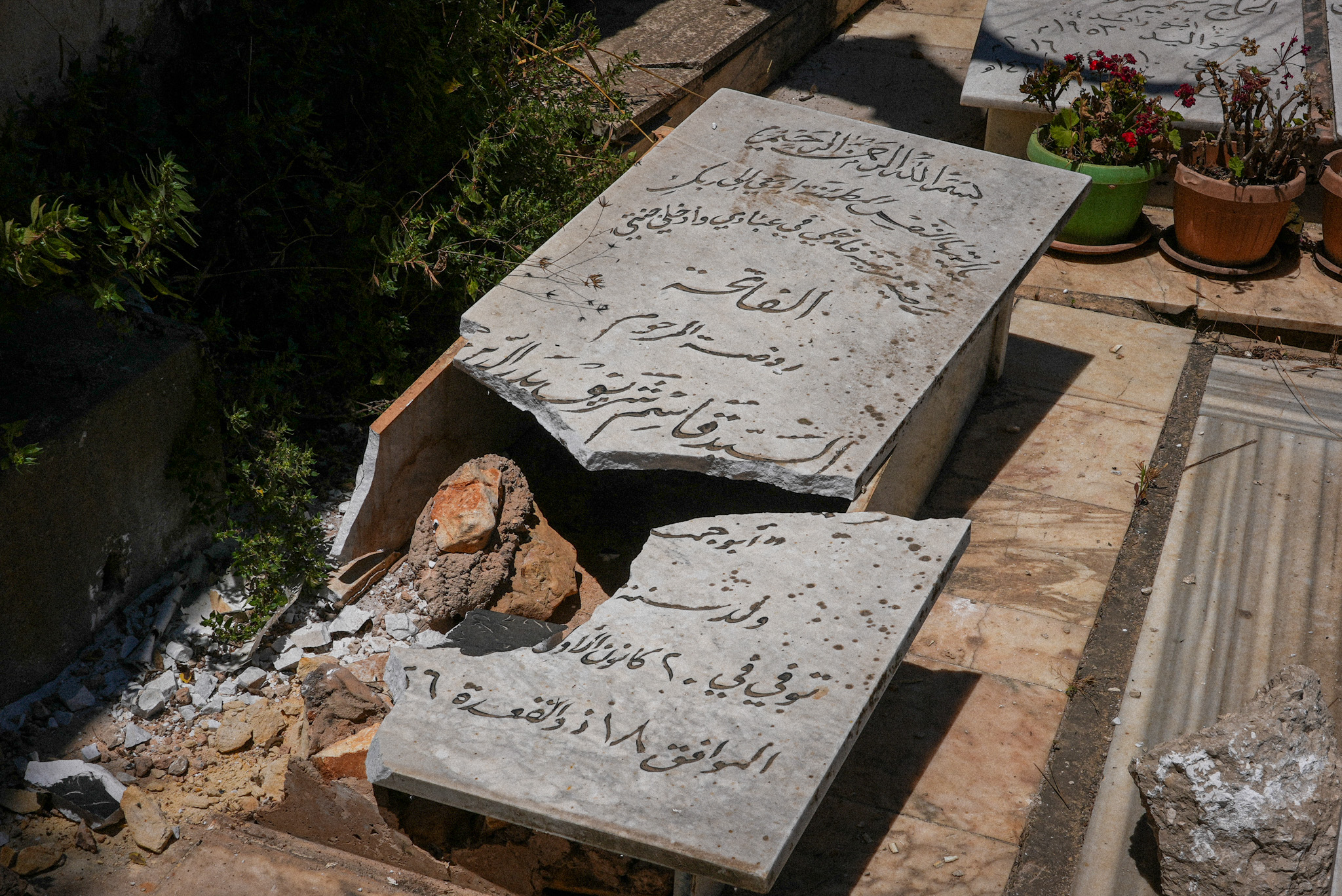
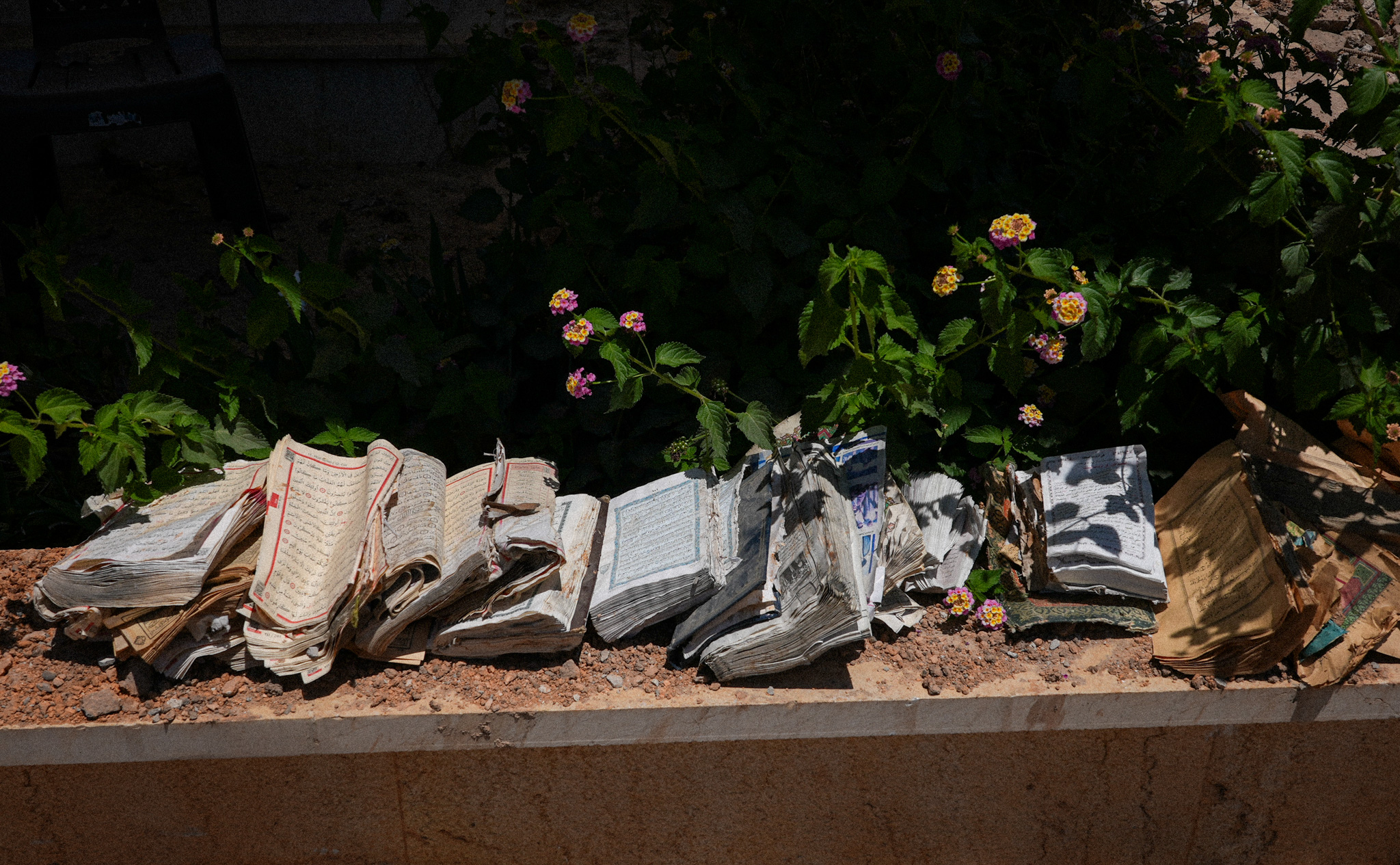
What pains me is the bulldozing of the graves. Will it sever my connection to the land? Only fools believe that. In our tradition, noble people were often buried in secret, for fear that enemies would desecrate their graves. Our lady Fatimah al-Zahra’, a figure most present in our faith, has an unknown grave. Zayd the martyr, Yahya the martyr, Hasan Ibn al-Sabbah, Sayyed Musa al-Sadr … Does the destruction or absence of a grave extinguish a soul? The graves of our Imams in al-Baqi’ have been demolished for a century. Yet the enemies will never understand that magical spell. They bulldozed the graves of our ancestors? The graves of our masters are unknown. They killed our children? This infant is carried by Husayn. Our young men fought them? This is the battle of Ali al-Akbar. Our elders fought them? This is the battle of Habib ibn Muzahir. And Khiam? Did they burn our Khiam? Yes, they burned Khiam. And they burned the homes of my people in Kfarkela and elsewhere, house by house.
Very well. What is the outcome? Nothing but to fight. And after the war, we will restore the gravestones to where they were. And on my father’s gravestone, I will write the true date of his birth. And if God keeps us among the living, I will tell my daughter about her grandfather, his father and mother, his grandfather, and his friends. I will tell her that she is who they are. I will carry her to that very cemetery and point out Misgav Am, and I will teach her that this land is called Palestine. And this is al-Azziya hill, behind it lies Kfarkela, where we will visit the grave of Hassan Atwi and Zainab. And this is Taybeh, the Taybeh of anemones. And that is Deir Siryan. And here stands Beaufort Castle. And there is Ali al-Tahir. I will tell her about the martyrs;, about her heroic cousin Haidar Khomeini;, about Jawdat and Rifaat and “Abu Azzouz,”; about all our martyrs. I will tell her about one of our martyrs from the Revolution of 1958, and our two icons, Hajja Fatima and Hajja Umm Hussein. I will tell her about the noble Ali Ismail Illeik, and the martyr son of the martyr son of “Abu Hassan of the Revolution.” I will point out their gravestones to her, one by one. And at the door of the house, I will hang a lantern for my grandmother to carry at dawn.
This piece appears in the twenty-second issue of The New York War Crimes.