

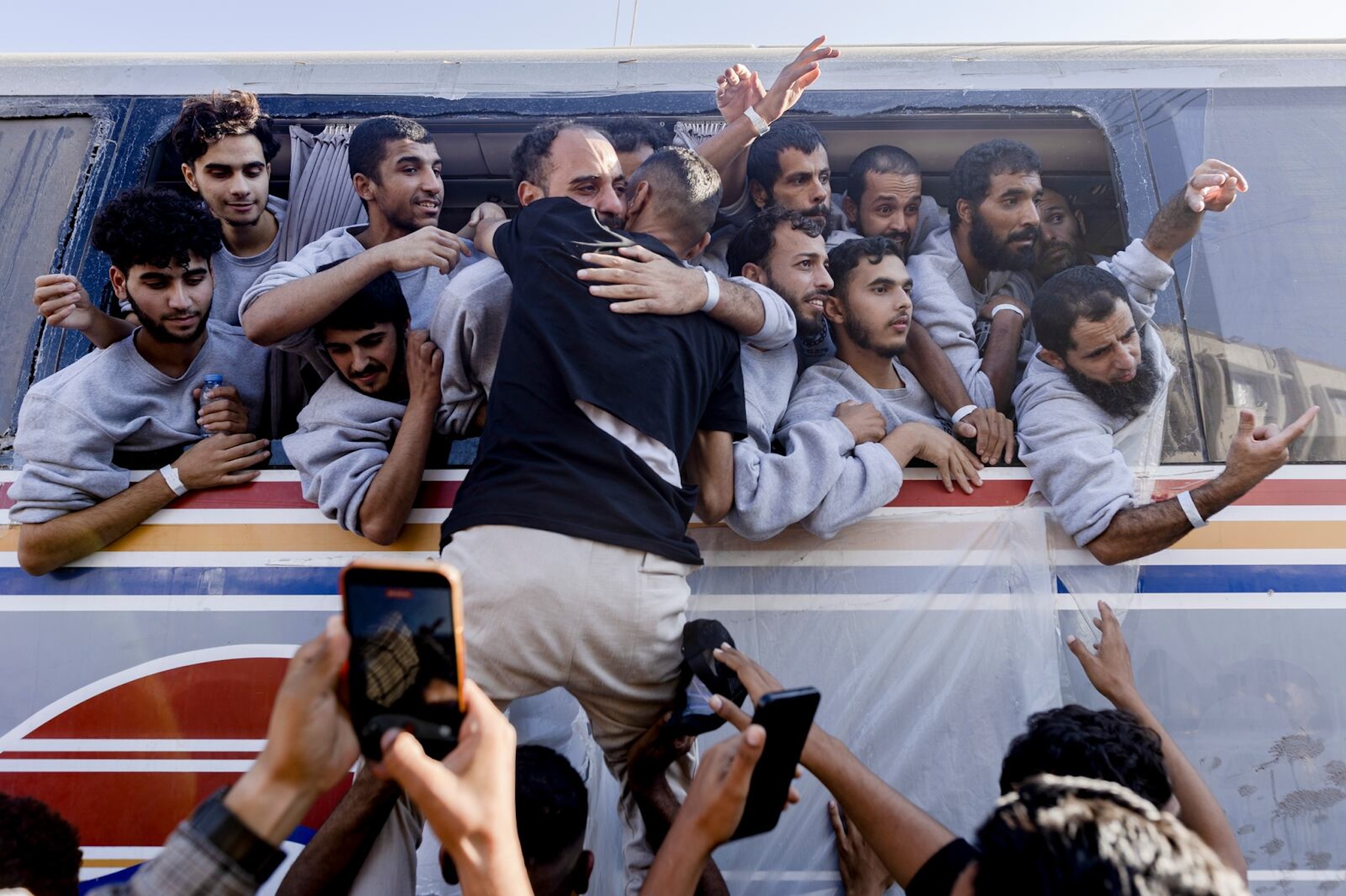
Since the war on Gaza began, Israel has waged a parallel war in its prisons.
I have worked in Israeli courts and visited Palestinian prisoners for more than 17 years, and followed the cases of hundreds, if not thousands, of prisoners all throughout my career. The last two years are completely different than before. What is happening after October 7th is a war on prisoners, without media attention and without any oversight. Israel even barred the International Red Cross from visiting prisoners and monitoring their conditions.
Ben-Gvir, the minister responsible for Israeli prisons, allows all prison guards to take revenge on Palestinian prisoners. This is in addition to removing all prior gains from the prisoners movement, from food to personal items, and further isolating them from the world, including their lawyers.
Even according to Israeli law, prisoners are allowed visitations with their lawyers whenever the prisoner or lawyer wishes. Under Ben-Gvir’s order, lawyers were completely banned from visits for the first four or five months of the genocide. In the first two weeks of the war on Gaza, the first prisoner was martyred in Megiddo prison. He was an elderly man with no prior illnesses but was killed because of the torture and abuse he suffered as revenge for October 7th.
After lawyers were allowed to visit prisoners from the occupied West Bank, Jerusalem and ‘48 occupied lands, we heard testimonies that surpassed imagination. Prison guards abuse and torture prisoners in the most disgusting ways. They’ve controlled prisoners’ food portions and what they are allowed to eat. Prisoners were denied a change of clothes and stayed in the same set of clothing, including underwear, for months or years.
Ben-Gvir has made it his goal to take revenge on Palestinian prisoners. He has been personally involved in limiting the portions and types of food given to prisoners. Food has been given to prisoners without any consideration for choice or for dietary or medical restrictions, including diabetes. What is more concerning is the quantity, designed to give prisoners a slow death. The world has seen the physical state of released prisoners and how they’ve lost tens of kilograms because of the systemic policy of starvation.
Even more saddening, concerning, and unbearable are the crimes Israel has committed without any consequences in the military detention camps — like Ofer, Sde Teiman, and others — that Israel has not yet disclosed. I could never have imagined the horrifying testimonies that I heard about the conditions of prisoners from Gaza, Lebanon, and Syria in the military camps.
Israel completely hid the existence of these torture camps. We, as legal representatives, had no idea and assumed for a long time that the thousands of Palestinian prisoners from Gaza were in prison administration waiting to be processed, which is the only place, according to Israeli law, in which prisoners can be detained. Only after the release of prisoners from Gaza did we discover that there are Israeli military camps imprisoning thousands of Palestinians. From there, the fight to find these torture camps started and legal institutions appealed to the higher court to inquire about the details and locations of these camps. Later, Israel confirmed turning military training camps into detention camps for the women, men, elderly, and children from Gaza, most infamously Sde Teiman torture camp located in Al-Naqab.
It is important to note that Sde Teiman is still standing, in addition to other military detention camps. I was one of the first to visit this detention camp when I visited Mohammad Arrab, a detained journalist from Gaza who worked for an Arabic TV channel and who is still detained.
During my 40-minute visit, he described torture and abuse. This visit was one the hardest for me personally that still affects me mentally to this day. His testimony described how prisoners are handcuffed and blindfolded for months on end. Without exaggeration. Even more terrifying and concerning were the testimonies of sexual abuse and rape and how Israel has used medical neglect as a tool of oppression and abuse.
Arrab shared with me in a visit in June 2024 that Israeli guards raped an elderly man from Gaza, in Sde Teiman, as a means of torture and revenge. The man was taken from his cell by Israeli guards and stripped of his clothes, with both his hands and feet tied behind his back. These 19- and 20-year-old Israeli guards, both women and men, inserted their military batons in his anus. These teenage soldiers shamelessly filmed this with their phones. The prisoner was then taken back to the cell and was left without any medical attention or care. The same day the prisoner died due to the sexual abuse and blood loss.
I know the name of this prisoner, but have decided to keep it private to protect his dignity. There’s another case of rape using a fire extinguisher. Can you imagine? A fire extinguisher.
The prisoner was 28 years old at the time of this incident. I still have no idea what ended up happening to him, whether he was released, killed, or if he is still detained. The chemicals from the fire extinguisher entered his body. And again, this incident was filmed. According to my visit with Arrab, the prisoner completely lost his mind after this traumatic incident.
Some prisoners had both hands and feet shackled with metal cuffs for months, until the metal started to eat away at their skin and reveal bones. Instead of providing medical treatment to these prisoners, military guards and doctors amputate their limbs. These amputations happen without any anesthesia, in a clinic known as “the butcher shop.” Any prisoner who shows signs of pain is tortured even more. You are not allowed to be in pain, you are not allowed to cry. All while blindfolded, unable to see what is happening to you, from amputation to rape and torture.
I have not been able to erase these scenes from my mind. Prisoners smell blood all day from the crimes of torture, amputation, and rape of their fellow prisoners. Recently, in front of the world and without any accountability, Israel closed the documented case of military soldiers raping a Palestinian prisoner. This gives the green light to Israeli soldiers to continue raping, abusing, and executing Palestinian prisoners without any consequences.
There are more than 84 documented cases of Palestinian prisoners who were killed in Israeli prisons without any consequences.
As a lawyer, I have lost all hope. I do not believe that the Israeli court system can bring any justice to Palestinian prisoners, especially those from Gaza. There are also Syrian and Lebanese prisoners who are currently experiencing the same abuse and torture in Israeli prisoners.
I urge the international community, the International Court of Justice, international criminal courts, and the free people of the world to apply pressure to their governments. Israel has taken advantage of the war on Iran to further isolate Palestinian prisoners, banning them from leaving their cells and barring them completely from any lawyer visits.
What Palestinian prisoners are subjected to does not exist anywhere else in the world. We, as lawyers, are the same as their families. We worry about the prisoners’ conditions and well-being. We worry that prisoners will be abused and killed in prison and that there will be no accountability. The message from prisoners today is: “Save us from death, we live in graves, save us from this mass graveyard. We no longer want freedom, we simply want to live with dignity and to not be tortured, abused, and raped.”
From a legal perspective there are two paths available for us to stop the war against the prisoners. The first path is to appeal to international courts. And the other path is a mass-based, popular path.
It is now time to redress the cause of more than 10,000 isolated, civilian, innocent prisoners held without any charges or formal accusations and without proper trial. It is time for the entire world to mobilize in order to bring an end to the war against these prisoners.
Khaled Mahajna, a Palestinian lawyer and human rights defender with the Commission of Detainees Affairs, gave this testimony during a March 16, 2026 webinar with the Palestinian Youth Movement.
This piece appears in the twenty-first issue of The New York War Crimes.
Sign up for updates on the Freedom for Palestinian Political Prisoners campaign here, follow the campaign here, and take action here.