

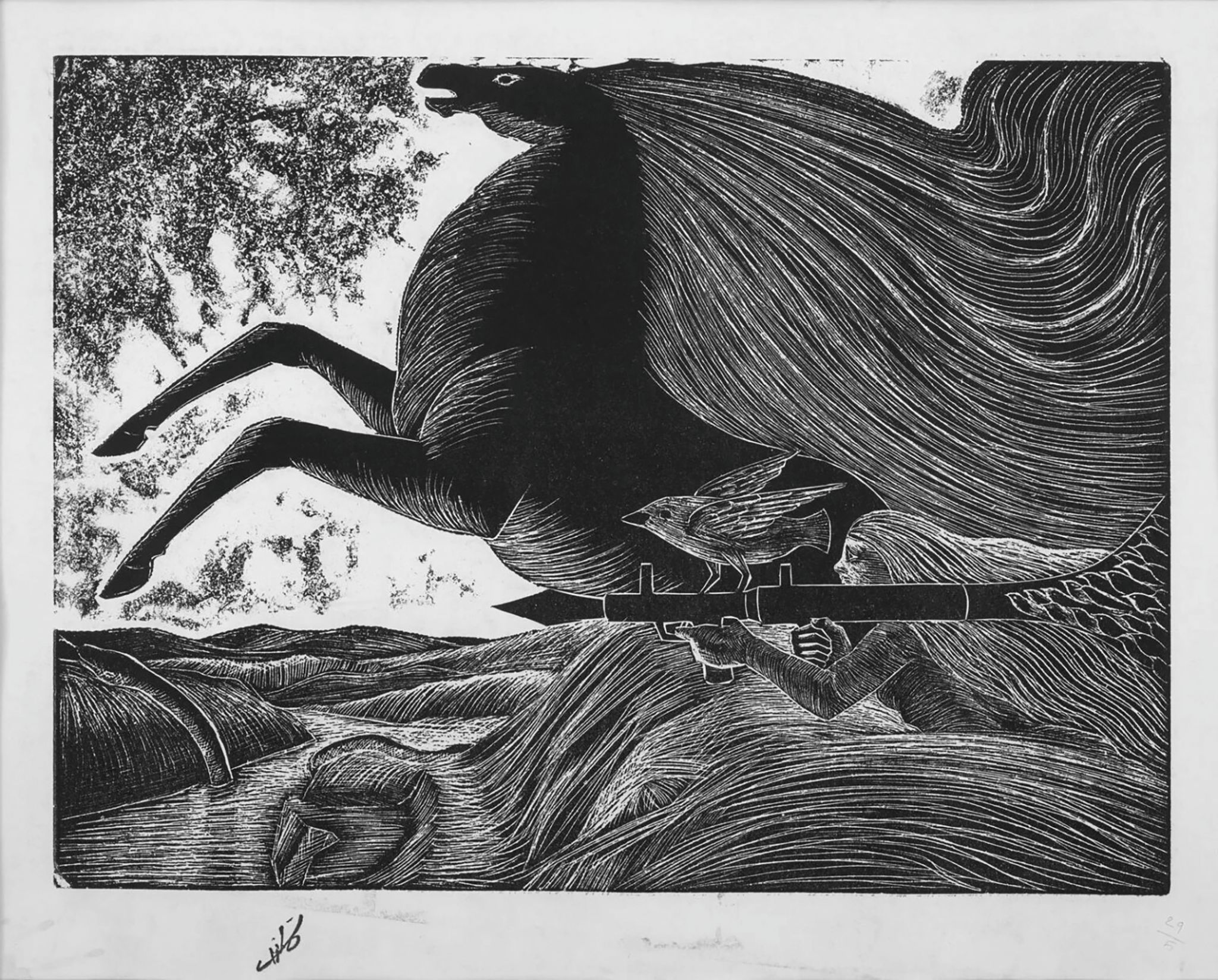
As we were putting together this issue, rescue workers in Gaza City pulled the remains of 96 martyrs, 58 of them children, from a single site in Zeitoun that the Occupation bombed three years ago. A six-story building — damaged by bombardment — collapsed, killing 21 people. Dozens of the displaced were martyred in drone strikes. Meanwhile, on the day he inaugurated two new settlements in the West Bank, the Israeli finance minister said that the entity needs “to go to war in Judea and Samaria, to do what we did in Gaza.” Yet the biggest story related to Palestine in the mainstream media concerned a rapper who had been dropped from a stadium tour, at the urging of a billionaire stadium owner, for saying “Free Palestine” on stage.
This was depressing. It was also a strange relief, an indication that solidarity, even at the discursive level, can still be threatening to capital and to empire. Often this is not how it feels. It feels instead like “Free Palestine” has become possible to say in direct proportion to how impossible it is to do. It is up to us to decide the slogan’s meaning. One task for the movement is to defend “our right to be effective,” as a former member of Palestine Action puts it in our featured roundtable discussion, with more rigor and fervency than we defend our rights to free speech.
Palestine is a winning cause. Many people who say the right words also seek to do the right thing. They are being misled by so-called movement leaders and political figures who are trading on that sincerity to raise money, advance their careers, and gain access to power — without ever using that power to fulfill a popular mandate. Take the case of Michigan Senate candidate Abdul El-Sayed, who, in 2024, backed Michigan’s “Uncommitted” campaign, helping mobilize 100,000 Democratic primary voters to withhold their support from then-President Biden in protest of his genocidal policies. But after winning the Democratic nomination for Michigan’s U.S. Senate seat, he was seen giggling at a campaign event with Kamala Harris, who helped facilitate the genocide under her vice-presidency. El-Sayed has also repeatedly condemned the Palestinian resistance, even implying, in an interview with CNN, that Hamas is evil. These photo ops and speech acts are not merely “pragmatic” necessities for swinging liberal voters. They are clear signals to the Zionist establishment that compromise is on the agenda. Our responsibility is to hold these people to positions that materially advance the cause of Palestine.
This issue, put together on the three-year anniversary of Al-Aqsa Flood, is a tribute to the primary fronts of struggle against Zionist extermination — Gaza, the West Bank, South Lebanon, and Iran — and to the martyrs who paid the ultimate price for their people.
In a spread dedicated to members of the martyred Nasreddine family in the southern Lebanese village of Ansar, we read the last written words of Zainab, gathering “as many flowers… saving them for days like these, days deprived of jasmines,” alongside an elegy by her brother, Mohamad. Grief is total: One part of the family cannot be separated from the whole, just as one part of a people cannot be separated from the rest.
Regular contributor Nour Abdel Latif pens a heartfelt ode to her city, Gaza, and the Septembers of the past that she loved. “I am writing this letter to you, Gaza, to tell you that, like you, I have survived… despite all the cruelty and genocide we have endured, we are still together… I will blossom just as you have blossomed after every time they tried to erase you, but history has not forgotten you.”
History never will. We must combat Western amnesia, document the U.S. and Israel’s war crimes and the media’s lies, and serve as custodians of the truth that has been entrusted to us by the heroic martyred journalists of Gaza. As part of that mandate, The New York War Crimes recently launched The Living Record, a growing oral archive of testimony by and about Gaza’s journalists. Eight of the 50 testimonies are excerpted here. “Losing you, Mariam, was devastating,” Baraa Lafi writes to her friend Mariam Abu Dagga. “I will keep holding on to the things of yours that I still have. I still have your coffee cup. I still have your water bottle.”
With Gaza as our compass, we must commit to the struggle on all fronts, beginning with unequivocal support for all coordinated resistance to U.S. imperialism. When the West Bank is at risk of being fully annexed, entire villages in southern Lebanon have been decimated, and elementary schools and critical infrastructure in Iran are bombed into oblivion, we cannot afford to stop at “Free Palestine.”
Iran stands as a rebuke to the U.S.–Israeli plot against life in the region, yet even “allies” on the left fail to recognize and honor Iranian political subjectivity, as Helyeh Doutaghi reminds us. Doutaghi’s interviews with Alireza Mirghaffari, president of the Association of the Gas Refineries Workers’ Unions of Bushehr Province, and Sadegh Shahbazi, a political organizer and activist, offer sharp analyses and bracing ripostes to Western media bias.
“I was born one year before the Nakba, and I will die one year before liberation,” the late Sliman Mansour, whose work is commemorated in this issue’s centerfold and is featured as our backcover poster, said in an interview in late 2025. “I don’t care, as long as there is liberation at the end.”
This piece appears in the twenty-third issue of The New York War Crimes.