

We knew the Great War was coming. We could feel it around us all the time, in the harsh white lights that cut toward us from the occupied hills, in the amphitheater of sound that the enemy erected over our heads: bleat of the Hermes 450, roar of warplanes, hiss of quadcopters at night. Daily death by drone was something to write about in 2009, according to the average American news editor, taken as she was by the specter of the detached killing machine. By 2024, a year deep into the Gaza genocide, such instruments had grown banal, a moral question of the past. But those of us beneath the occupied skies knew: This was not a life.
In the capital, politicians celebrated the nation’s new dawn. Billboards with images of the president and prime minister’s smiling faces rose along the sides of the highway. “The resistance has been defeated,” they intoned in parliament, at press briefings — and the state would at last have a monopoly on arms. They affirmed that the neoliberal order would be restored; the downtown frequented by elite clientele; the banks padded with fresh dollars from the Gulf States. American envoys began making regular trips to Beirut to grace the city with their pretension and bigotry; Morgan Ortagus got a blow out and took a selfie with Lebanese fashion designer Elie Saab; Tom Barrack called Lebanese journalists “animalistic” at a press conference. All was forgiven in the spirit of the Zio-American quest to turn Lebanon into the next comprador Arab state.
But beneath the prized earth of the South, the resistance regrouped, studied the enemy’s movements. The Zionists’ daily assassinations and incursions were a test of patience; the resistance must only wait for the right moment to strike back and defend the land. It came at last on the second night of the US–Israeli assault on Iran: six rockets fired from the South toward Zionist missile defense systems in occupied Palestine.
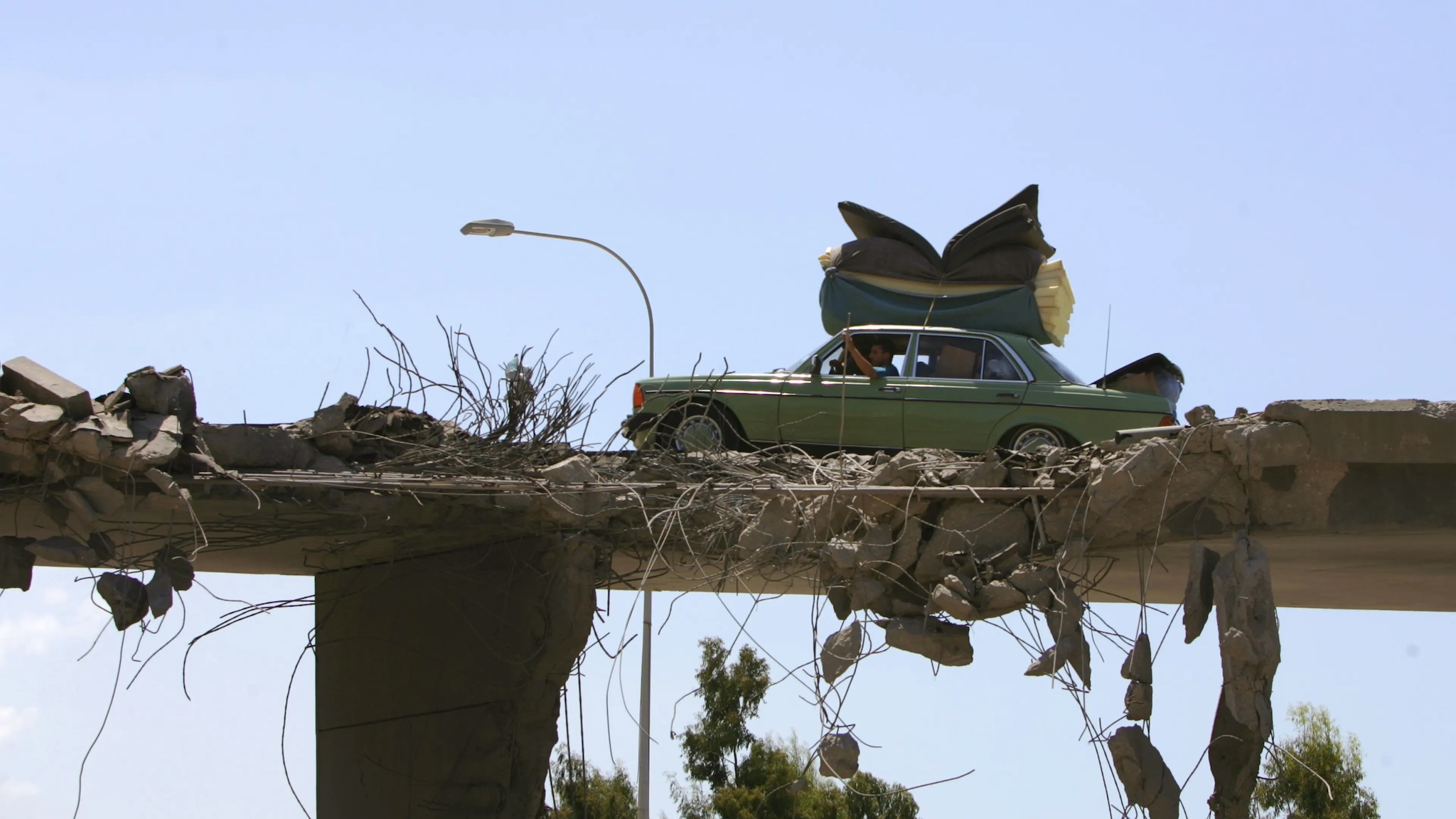
The Zionists immediately escalated their campaign of genocide and ethnic cleansing against the people of the South, issuing sweeping displacement orders that sent hundreds of thousands fleeing north in the middle of the night with nowhere to go. The government, punch-drunk from its tryst with the Americans, dragged its feet on securing shelters for the displaced. Along the seaside boardwalk, many ended up pitching tents in the cold, rainy nights.
The Zionist massacres began to multiply: eight martyred in Sour as they sat for iftar, 41 martyred in Nabi Chit as they fought an IOF helicopter incursion, eight martyred in a strike on a tent encampment in Beirut’s Ramlet el-Bayda’s public beach. The Zionists bombed displaced Shia in the predominantly Christian areas to which they had fled, prompting some host communities to expel their new residents. Thousands packed their bags and returned to the South, preferring to die at home than live in humiliation.
On the border, the cowardly enemy invaded under the cover of artillery shelling, razing homes to the ground and burning the land with white phosphorus bombs before moving in to seize territory. Again and again, they were repelled by the very resistance that they declared defeated a year prior. The village of Khiam — famed for its eponymous prison, where the Zionists tortured resistance fighters during its 18-year occupation of the South — was the front line. The resistance allowed their convoys of Merkava tanks to enter before setting the first and last in the line alight, forcing the enemy to send in helicopters to evacuate the soldiers stranded in the middle. The resistance set traps, settled beneath the ground in waiting, emerged to ambush the invaders and then disappear. We are fighting ghosts, enemy soldiers cried in Gaza. Lebanon is a graveyard for Israeli soldiers, squalls the Zionist press today. Their machines may swarm the sky but we are the keepers of the earth.
Enraged by their failed attempts to take our land, the Zionists have resorted to their usual playbook, releasing fire from the sky. As in Gaza, healthcare infrastructure has become a central target. Ambulances rushing toward the wounded, doctors and nurses sustaining medical centers across the South, EMS personnel digging through rubble are being struck day after day — yet they refuse to leave their posts, even at the cost of death. In late March, two of the South’s bravest voices, Fatima Ftouni and Hajj Ali Shoueib, were martyred in the Jezzine district while on assignment for al-Manar and al-Mayadeen broadcast channels, respectively. Thousands attended the funerals, weeping while throwing rice toward the coffins in congratulations for the martyrs’ sacrifice to God, to the land, and to the people.
The Zionist entity took its scorched-earth policy to a depraved new low, consumed by their cowardice and unraveling: Less than one day after agreeing to a ceasefire with Iran, Israel rained 100 bombs across the South, Bekaa, and Beirut in just 10 minutes. Buildings flattened on peoples’ heads, entire towns in the South decimated with a single strike, massacres similar in scale to those in Khan Younis replicated. According to the latest estimates, 300 martyrs ascended; some are still trapped underneath rubble.
After nearly a century of this rabid rage, this enemy still cannot see us. It can study the contours of our earth with its high-resolution imagery; it can track the signals on our devices, even learn our language; it can burn our groves and destroy our villages — all in pursuit of breaking our will and changing the direction of our hearts. In vain. No matter how much destruction it wreaks on our land and people, no matter how much fire rains from the sky, we will never betray the blood of our martyrs. We will never surrender the path of resistance. We will never normalize with the enemy of land and life. And we will survive, and we will resist, and we will return, and we will remain.
This piece appears in the twenty-first issue of The New York War Crimes.