

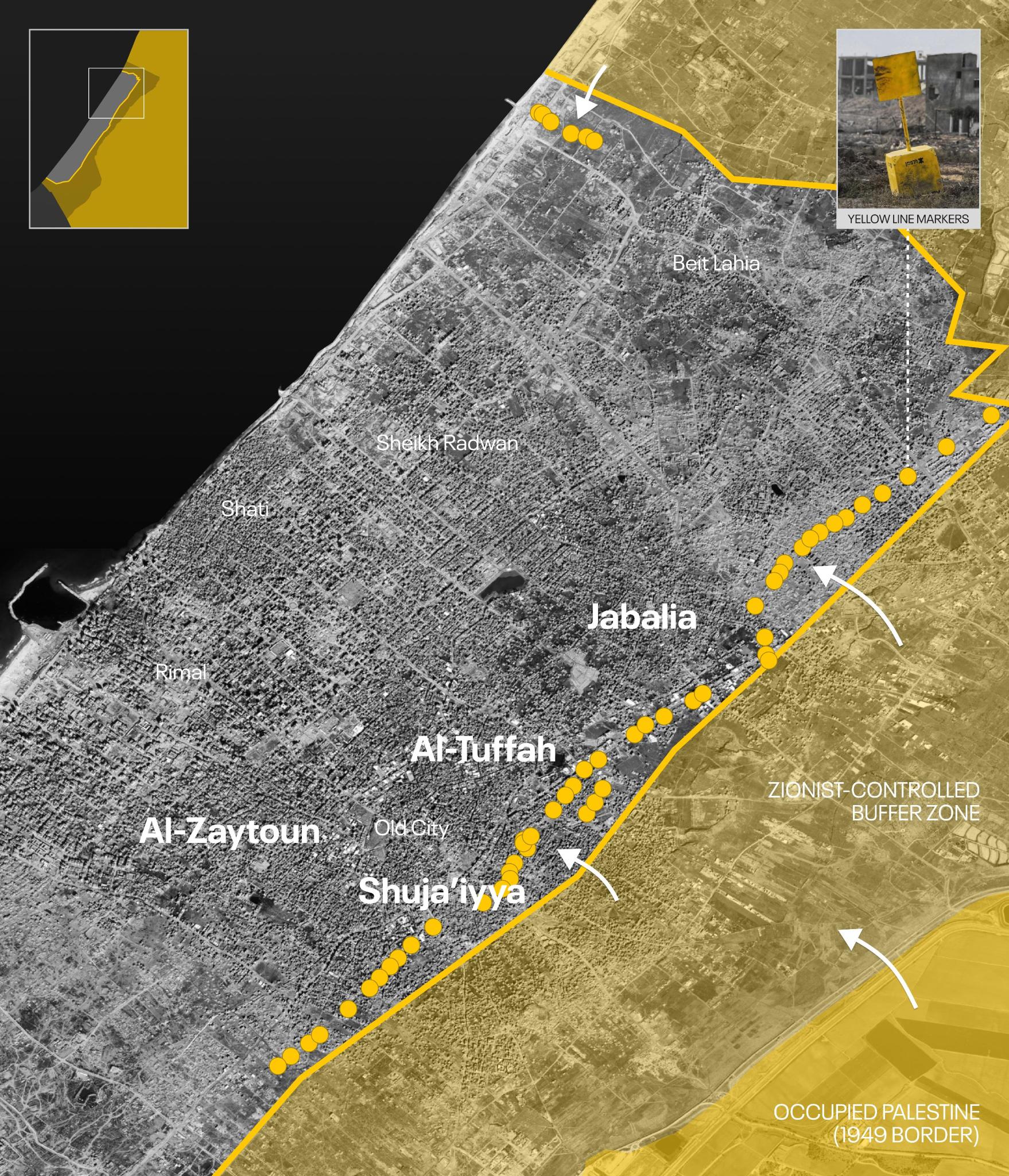
To describe Gaza as the world’s “largest open air prison” is to recognize its colonial borders as the walls of confinement — and the region’s wider frontiers as the contours of a broader carceral system of control.
The 1949 Armistice Agreements between Israel, Egypt, Lebanon, Jordan, and Syria, following the Nakba, delineated Gaza and the occupied West Bank along the Green Line — designating them as territories bounded by lines intended as non-permanent. Israel’s construction of border infrastructure and military surveillance systems over decades transformed that boundary into a permanent frontier for encroachment. Following the October 2025 ceasefire between Hamas and Israel, the occupation announced the creation of a new military demarcation line, the Yellow Line, that reduced Gaza’s land area by almost 60 percent, further squeezing the population against the coastline. Occupation forces continue to close in, cementing this line into the lives of Palestinians in Gaza through yellow-painted concrete blocks, planted even beyond Israel’s unilaterally imposed boundary. Zionism continues its relentless campaign to occupy the land and strip it of Palestinians.
What do these changing borders mean to those living on the land? For he New York War Crimes, Ali Skaik gathered ten firsthand accounts from Palestinians living within the barriers and boundary lines that structure daily life in Gaza — tracing both the limits imposed on them and the ways they continue to live and resist.
Mohammed Mansour
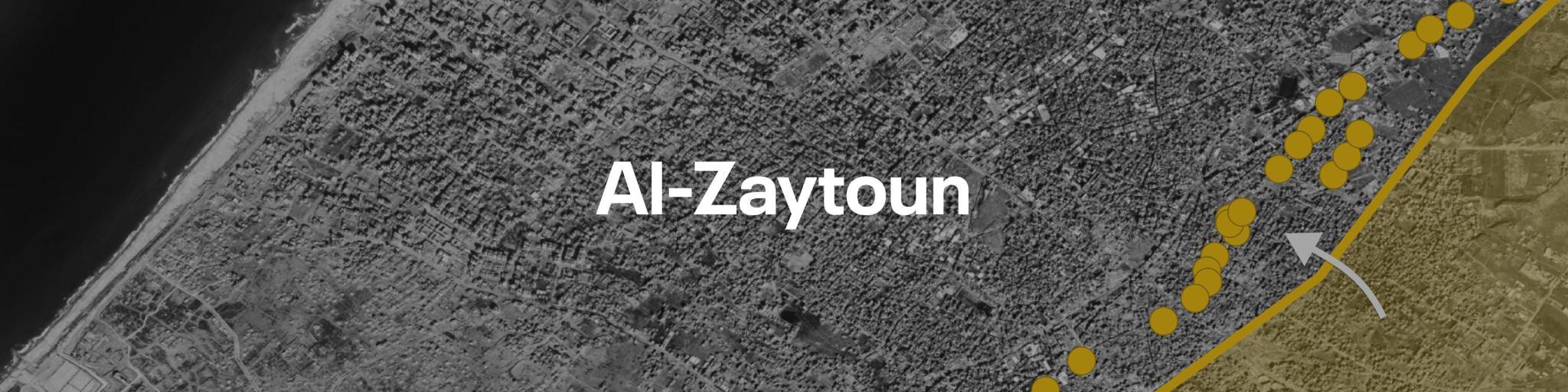
We’re about 250 meters from the Yellow Line. Honestly, we’ve gotten used to it. We face gunfire every day, mostly in the mornings. About ten days ago, the Occupation was working on something just across the Yellow Line. I don’t know exactly what they were doing, but, whenever anyone walked through the street, they were shot at. People were scattering constantly. Similarly, there was a girl from the Haddad family who was shot in the neck while in her home. The bullet went through one side and came out the other. That same day, early in the morning, maybe at 8:30, the Thair family were sheltering at a junction on Salah Al-Din Street. They were shot at repeatedly. The father and his wife were severely injured, the bullet hit a major artery in his leg.
If the house came down on me, I still wouldn’t leave. Where would I go? I have acquaintances and friends in the south, but they have been displaced. Aside from the cost, it’s more needless suffering. Why would I go stay with someone who has already been displaced? You can make do in your own home, so why would you go be a guest in someone else's?
Any talk of a ceasefire is fickle. At any moment, you expect they’ll strike. Some time ago, we were displaced again. It was a terrifying situation for everyone. They told us the tanks were breaching towards the area. When people saw them, panic spread. Everyone fled, so I left with them, even though I didn’t really want to. May God guide everyone towards the right path, it’s the only way we can sustain. But living in this chaos is just wrong.
Ahmad Rami
Life here is really painful. It feels like the war is still ongoing. There’s gunfire and shelling nearby. Every day there are martyrs and wounded. Most of the time, the Jews advance and then pull back, crossing the Yellow Line more every time. There’s also Abu Shabab’s militias. It’s all such a painful existence, you can’t live daily life.
The constraints are constant. You have to make sure you’re home by Maghrib before Israeli forces move in and the shelling begins. You’re forced into impossible decisions constantly. If someone gets sick, for example, and you need to go outside at night, you just can’t. You must wait until morning before you can get to a hospital. You’re deprived even of prayer. You could wake up for fajr, for example, get ready, make wudu, and prepare to leave. Then the gunfire starts. We’re trapped, unable to move freely, stuck in a closed circle.
But the truth is you can’t really leave your home. People are no longer able to take others in. God help them with their own thirst, their own daily needs. How could anyone manage to get through a day?
About a week ago we were in the neighborhood when, suddenly, the quadcopter started firing. My friend’s sister was shot in the neck while sitting in her home. In reality, you’re not even safe in your own home.
Mohammed Al-Habashi
We are residents of al-Sha'af. Our home was destroyed at the start of the war. The army obliterated everything. We endured, said may God ease things, then they pushed us towards the Yellow Line. We were forced to stay there, but day by day the army advanced one or two hundred meters at a time until we were forced towards Salah al-Din. We found ourselves sleeping on the street, there was nobody to turn to. When the second ceasefire was declared, we had hoped for the best.
I was displaced ten times. My brothers and parents were martyred. I have no place to go. All I ask is that the world look at us with mercy. There is nobody here who can take someone in anymore. I tried to rent twice. I stayed in tents by the sea and the port. We’re exhausted. Just yesterday, the army stormed into our area. They attacked relentlessly. Two or three times, Abu Shabab’s militias have come in without warning, without any regard, and dragged everyone out to the street — young women included. By the grace of God, my children and I survived.
The Occupation is stationed exactly 150 meters away from me. As I’m speaking to you. on the street behind me, there are military vehicles, tanks, and special forces. They’re raiding houses. They’re rigging homes with explosives. They’re burning houses and cars. Every day.
My children are afraid. The whole household is afraid. The neighbors around us are afraid. We have no water, no electricity, nothing reaches us. This is not a life. Only a few houses remain. As I’m speaking to you right now, the quadcopters are overhead, the planes are overhead. The situation is catastrophic. No one could live like this. The military vehicles are right there, they’re right in front of you, it’s about 100 meters between us and them.
Refat Al-Khalili
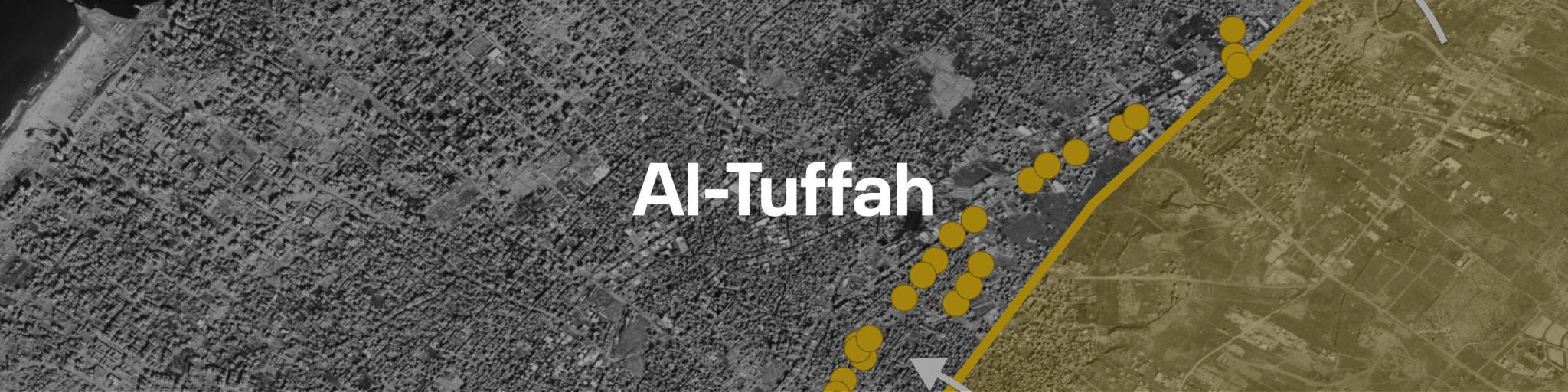
I’m from al-Tuffah, in Al-Shawa Square. I’ve been here since the beginning of the war. You hear all this talk of a ceasefire, but there’s been gunfire, shelling, F16s every day. The explosive devices—the robots the Jews deploy—are used everyday. It’s ongoing, it won’t stop, and we won’t leave this place no matter what happens.
Death is ever present here. The American President spoke of a ceasefire, but we’ve seen none of it. Everyday Abu Shabab’s militias encroach, Occupation forces encroach. Every day there are martyrs and wounded. Behind us is Salah al-Din. Tanks are positioned there, towards al-Sanafir, and snipers are present in the buildings on the eastern side.
This entire area is living in a state of fear and terror imposed by the Israeli occupation and Abu Shabab’s militia every day. Yesterday, they came to the area around al-Qa'qa' Mosque and told people they had until twelve to fully evacuate their homes. It all speaks for itself. Nothing has changed.
Nayef Al-Sleibi
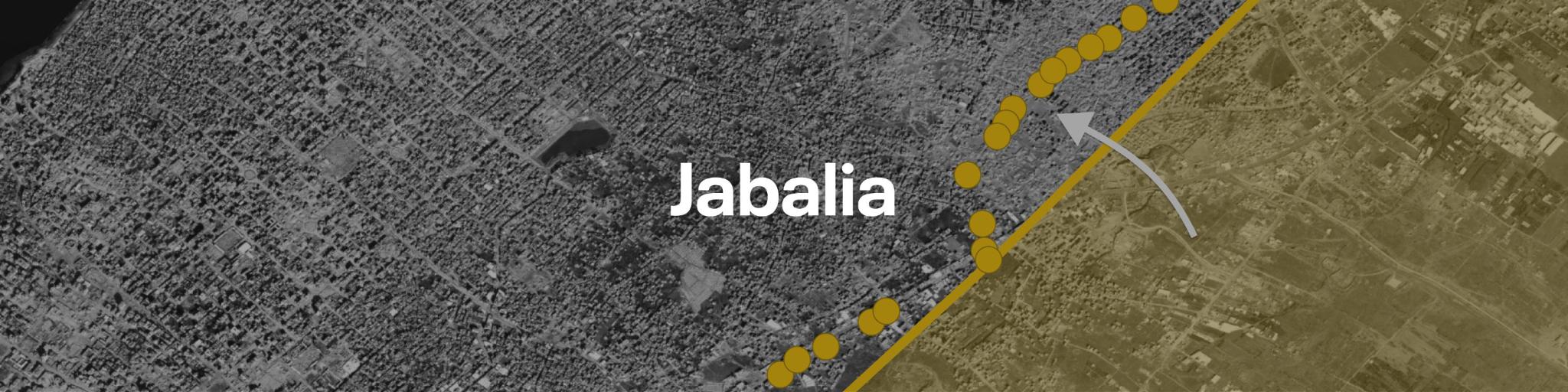
I’m a resident of Jabalia camp, on al-Hawa Street. We returned here after the ceasefire was declared and found the Occupation army still stationed. We sheltered at Al-Yaman Al-Saeed Hospital waiting for them to leave, but they never did. They continue to shell the area constantly. Just tonight, they detonated an explosive robot.
There’s no life here at all. There are few people, there’s no water, none of the bare necessities. Most everyone retreated west. There’s no room to make a mistake. The quadcopter can barely catch up with itself; it's so busy firing at people.
It’s impossible for one to return home. Snipers surround the entire camp, they’re positioned facing every house. God willing, they will withdraw, and people will return here, and water will return, and life will return. But without withdrawal, there is no life.
Youssef al-Bardaweel
I live not fifty meters from the Yellow Line, by Al-Khulafa Al-Rashideen Mosque. The fear is constant, twenty-four hours a day. Quadcopters are overhead, gunfire and shelling don’t stop. It’s all intent on driving us out of the area. But we have no other place to go. There is no alternative. Even if I wanted to rent, all our money was lost in the first, second, and third displacements. I was forced back here, but we’re trying to make do, though the house is badly damaged.
We’re exposed to danger, but if we could leave, we would have left like others before us. Right now, around Al-Khulafa, no more than seven families remain. The rest of the area is completely abandoned. When the quadcopter begins shooting at us, we scatter towards abandoned homes trying to escape the gunfire.
The Yellow Line is right there and my family’s home is right here. There’s a room beneath the rubble where I live with my family. It’s incredibly difficult to enter. You have to crawl through something like a tunnel just to reach the room—the space is no more than about 50 meters. It’s dangerous, but it’s all dangerous. Just this morning, I walked past the Yellow Line, and the Israeli Forces were present, working on something, I don’t know what.
Moussa al-Madhoun
I’m a resident of Jabalia. This Yellow Line they talk about, the one we’re forbidden from crossing, people’s homes are there! Families can’t even reach their belongings, their winter clothes. In the camp itself, they’ve divided the area into a Yellow Line and a Green Line. The Green Line is supposed to be safe and the Yellow Line off-limits. But of course that isn’t true. It’s all the same. Gunfire reaches, tanks are advancing, there is no life here.
People can’t even return to the rubble of their homes. Why? All because of this Yellow Line? We call on the United Nations, on international institutions, on Arab and Islamic countries to move this line. If it is not returned to its previous boundaries, there will be no life in northern Gaza.
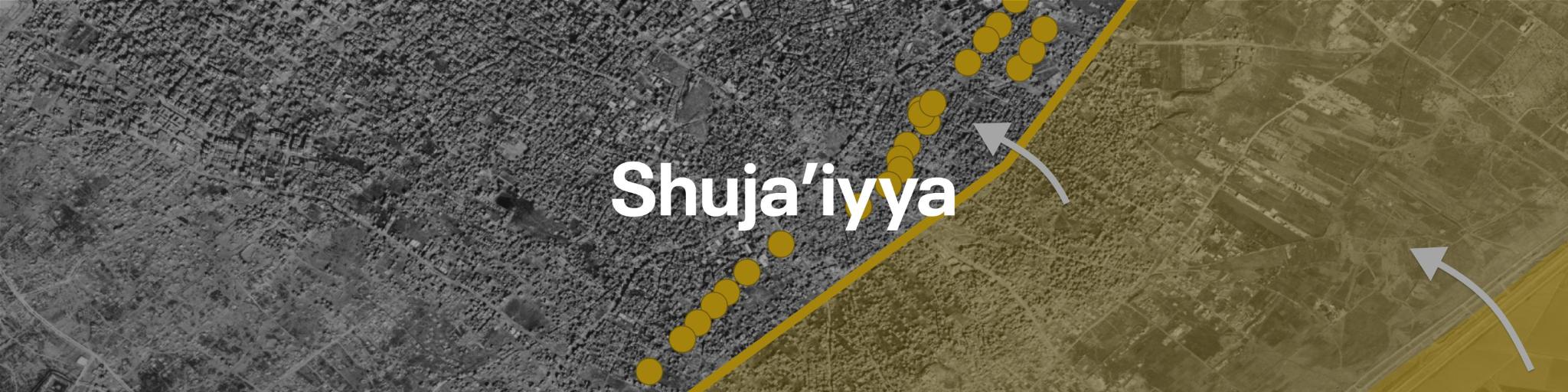
Akram Jarara
After everything we endured in Shuja'iyya, I tried to flee to a number of places, but Gaza’s streets, unfortunately, are crowded with displaced people and tents. When Trump’s ceasefire was declared, under instructions from the Israeli army, we returned north again and tried to set up a tent over the rubble of our home. We remained there for about a month before even that was taken away. The yellow line shifted and suddenly we found ourselves living inside the prohibited zone. I’m now forced to live in this unsafe place, completely unfit for human life. I’m with my wife, my married son and his family., My daughter is with us too along with her children. Her husband was martyred. We are crammed together. Day and night snakes, reptiles, and stray dogs rummage through this place.
I used to own a six-story home and now we live here, forced to use this indecent bathroom. This is the suffering we must live with. Now, we lack everything: medicine, food, water, shelter. We’ve been displaced twenty-one times during the war. Street to street, neighborhood to neighborhood, city to city, north to south. Twenty-one displacements. This isn’t just hardship; every one required significant sums of money.
The reality is that there is no ceasefire. If you want to see a man die of hunger, you will see it. Children die of hunger. People die of cold. People die from snake bites, stray animals, lack of medicine, the absence of hospitals. People die from bombardment, destruction, and the continuous pursuit of the Israeli army.
For fifty-eight years, I built a home, brick by brick. Somewhere I could grow old and finally rest. Then suddenly, it was gone. It would take another sixty years to build something like it. Look at the years that were lost from our lives. Today, our greatest hope is to find a tent that’s fit for living. For a loaf of bread to feed our children. For one night without fear.
About three months ago, my home was completely destroyed. It is difficult now to retain even the most basic sense of time. Dates mean nothing. We are psychologically ill. The mind cannot hold onto anything anymore. The bombing, the hunger, the cold, they have broken us. We can no longer process anything.
Hala Abeed
I’m from Shuja'iyya, right across the Yellow Line. We were displaced first to Deir al-Balah, then to this area. We’ve been forced to leave things behind over and over. We have nothing now, no bedding, no clothes to keep us warm.
They’ve occupied our home. The place I’m in now is extremely dangerous. We’re exposed to death at any moment. When me or my children go outside, we’re exposed to gunfire constantly. It flies right around our feet, above our tents.
The tents are unbearable. After all the suffering we’re forced to witness every day, we’d hope to have the night to rest. But the flies and mosquitoes are killing us. The heat, the sun is relentless.
There simply aren’t any other places left. We had no choice but to stay here.. There are no food distribution sites here, no real aid. Even water has to be fetched from a hose that’s very far away.
We’ve been forced to leave things behind over and over. We’ve left behind bedding, our children’s winter clothes, our own winter clothes. We have nothing now, no bedding, no clothes to keep us warm.
Even making a cup of tea is a struggle. You have to do it over fire, under the heat of the sun. There’s no shade, no relief. I wish I had cooking gas. I just want to make a cup of tea on a gas stove. Cleanly and with some peace of mind.
We’re exhausted. Exhausted! My husband has been imprisoned for a year and nine months. I’ve been forced to carry all the responsibility. We just want to rest after these two years.They say there’s a ceasefire but there’s nothing. There’s gunfire above us, rockets overhead twenty-four hours a day. We sleep in fear. The war never ended here.
Bassam Abu Sheybe
I was displaced more than twelve times. From Gaza City to Nuseirat, from Nuseirat to Deir al-Balah, from Deir al-Balah to Rafah, then back to Deir al-Balah, then to Nuseirat, then back here. Then we left again, back to Deir al-Balah, and came back here again for the final time. It’s unbearable. There’s nothing left. We have no patience nor will to keep going.
You ask me why I’ve ended up here.It’s because there is nowhere else to go. There is nowhere for somebody to stay. There are no apartments left, no rentals we could stay in, nothing fit for life. So you come here even though it’s dangerous. At night, there’s constant gunfire, shelling all night. They say there’s a ceasefire, but it hasn’t stopped. We’re here because we have nowhere else to go. This is all that’s left. If Shuja'iyya were open, we would go back immediately, but it’s closed.
I miss my home dearly, but who doesn’t miss his home? It’s your home! The place where no one tells you to leave or demands money. It’s the only place you can truly rest.
This piece appears in the twenty-first issue of The New York War Crimes.