

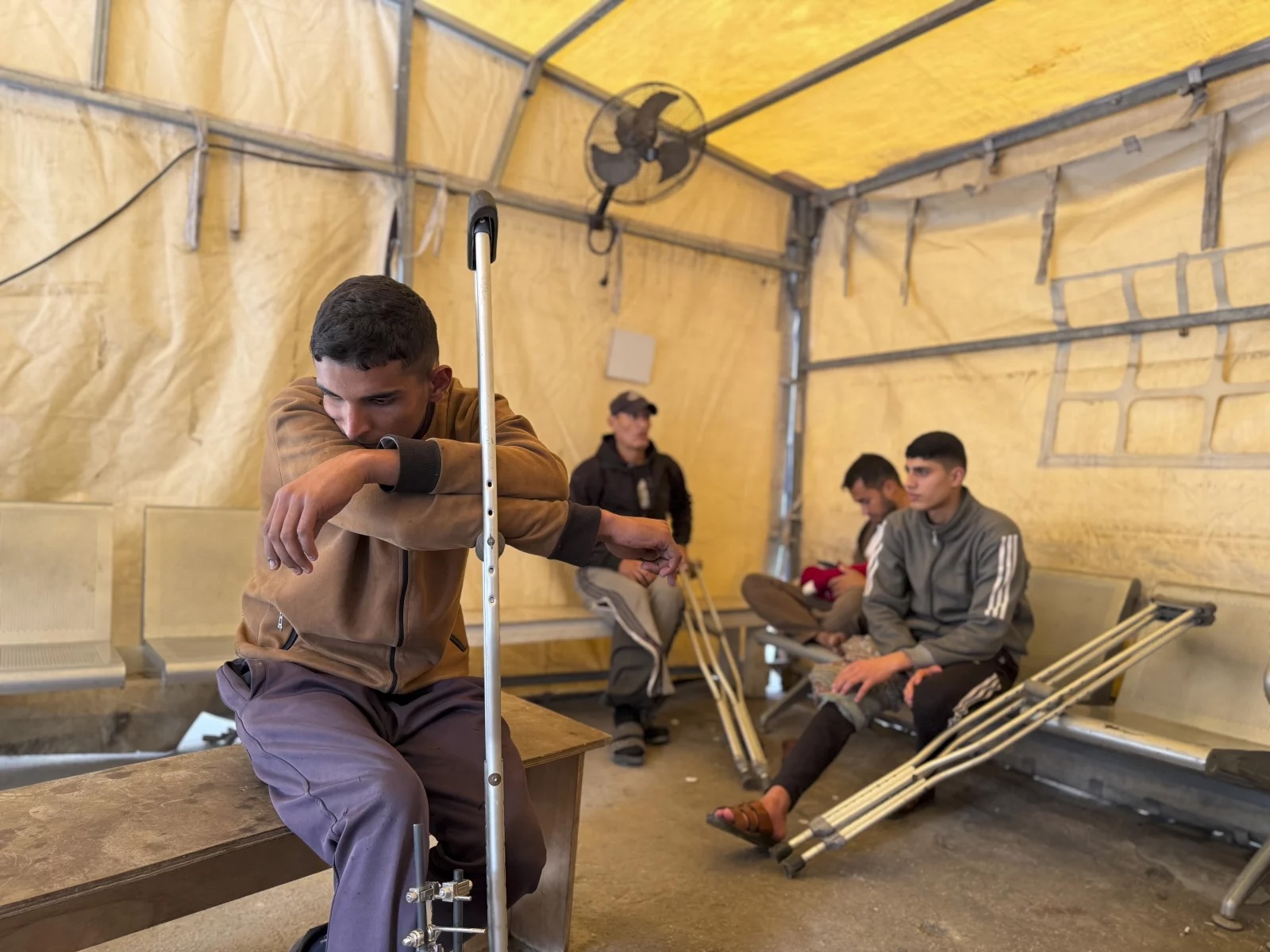
Mousa Hassan, a 29-year-old Palestinian from Gaza, thought he had overcome the most difficult battle of his life: cancer. After months of chemotherapy and a successful bone marrow transplant, he was almost back to normal. Instead, Israeli forces kidnapped him while he was receiving cancer therapy in Tel Aviv. Denied life-saving medications and proper medical care and beaten repeatedly in prison, Mousa’s story reveals a grim reality for many Palestinians in detention: they are punished for who they are.
Can you briefly introduce yourself and tell us about your life before the arrest?
I'm Mousa Hassan, 29 years old, and married. I used to live with my family in the north of the Gaza Strip, in Jabalia, before it was destroyed. Before I was detained by the Israeli occupation, I worked for a small company with a low salary, which I was pleased with. I was trying to live a normal life. After work, I usually spent most of my time with my family and focused on my treatment. For people who have cancer, time is precious. I also helped my family as much as I could despite my illness.
My biggest dream was to live long enough to have a child and watch him grow up. I hoped I might one day see his graduation or even his wedding. I was on the path to recovering from cancer, but my detention by the Israeli occupation changed everything. I came closer to losing my life and my dream.
When were you first diagnosed with cancer, and what kind of treatment were you receiving?
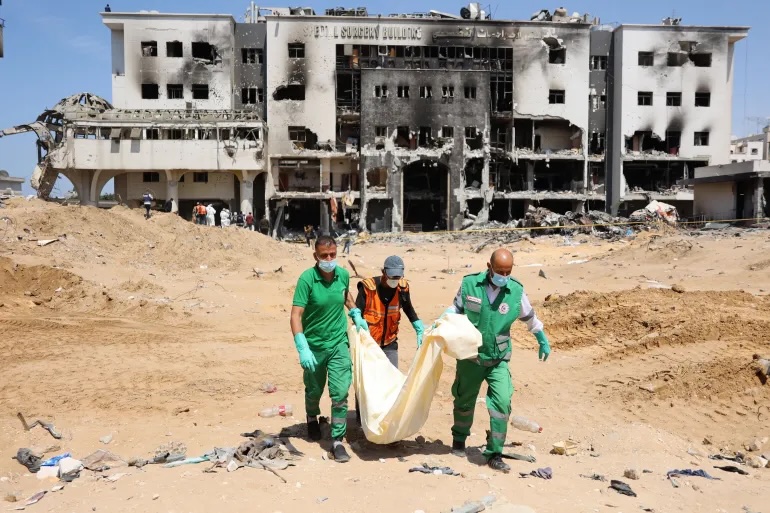
I was diagnosed with Hodgkin Lymphoma in 2018. At that time, I began my treatment in Gaza at AlShifa Hospital. It was a long and uncertain medical journey. The Israeli blockade of Gaza has severely affected the healthcare system. As a result, there were no treatments available for my cancer in Gaza. I had no choice but to take my treatment outside Gaza. In my case, it was at an Israeli hospital.
A security permit is a document Palestinians must apply for to enter Israel for work, visit, or even for treatment. The Israeli Ministry of Defence conducts a full security check on the person. If he poses a threat to Israel, he is denied entry. This means that Israeli security agents are not supposed to detain you or cancel your permit without a logical reason once you’ve passed the check.
In 2019, after months of applying for the security permit, they finally approved it. I was finally allowed to have my treatment at Sheba Medical Center in Tel HaShomer. I started my chemotherapy treatment. It exhausted my body, but after months, the doctor told me my prognosis had improved. I saw the light at the end of the tunnel. I was one step closer to my recovery. The first thing that crossed my mind was the dream of having a child and a normal life. But that didn't last for long.
The Israeli occupation cancelled my permit for no reason. I was prevented from returning to the hospital after I was so close to recovery. Soon, my health rapidly deteriorated. When you have cancer, every missed treatment matters.
After 8 months of pain, I managed to get a permit again. So, I started my treatment from the beginning, but unlike the first time, it wasn’t easy. The disease had returned and spread throughout my body. However, I continued with hope. After a year and a half, my prognosis had improved. But again, it was only temporary. Israel revoked my permit for the second time for no reason.
Again after several months, and after a lot of pain, I managed to get another permit. By that time, the cancer had spread through my body worse than before. I could no longer move at all because of the pain. An ambulance took me directly from my home to Sheba Medical Center in Israel.
After I arrived at the hospital, I began my treatment. My initial prognosis was poor, but over time, I improved. I underwent chemotherapy and a bone marrow transplant, which was successful. I began receiving treatment prescribed for after the bone marrow transplant procedure. Everything was going to be good, and the light at the end of the tunnel came back. But then, Israeli soldiers detained me.
Can you describe the day you were detained?
I still remember that day clearly. It was the worst day of my life. I believed I was finally on the road to recovery. Instead, it became the day I was detained.
On the morning of October 7, I was at Sheba Medical Center. My treatment used to start early, so I was waiting for the doctor. Suddenly, Israeli forces announced in the media: "All Palestinians, even those from Gaza, must leave Israel's lands and go to the West Bank." This included people who were in Israel for medical treatment, like me.
I always used to have my valid medical treatment security permit with me. I took my bag and headed to the bus station. I felt worried and afraid of losing all the progress of my treatment again. There was no treatment for my cancer in the West Bank, but I had no choice but to go to the West Bank. While I was on the bus, I kept wondering what would happen if my treatment stopped. Would I die this time?
Suddenly, Israeli forces stopped the bus and asked, “Who here is Palestinian?" Almost 40 people raised their hands. We told them we were going to the West Bank as their announcement required, but they forced us to leave the bus.
They asked me about my bag. I gave it to them. It held my clothes, my phone, some money, my hospital documents, my permit, and my ID card. One of the soldiers was holding my ID card in his hand. Meanwhile, he was asking me about my name. I answered him, but he hit me with an iron baton. I felt a lot of pain. So I told them “I have cancer, you saw my documents.” They hit me again. They ignored my permit and my hospital documents.
In the hospital, I had learned some Hebrew words. So, I told them again in Hebrew, “I have cancer,” to avoid any doubt about not them understanding me. I tried to explain in Arabic and Hebrew. But they kept shouting “Sheket” (Hebrew for “be quiet”). I explained everything in Hebrew so they could clearly understand me. Still, they ignored me.
The soldiers hit me again on my head and chest. They kept beating me repeatedly. Blood started coming out of my mouth. I felt that my ribs were broken. I could hardly breathe.
That made me wonder if they even understood their own language. I was only following the Israeli forces' orders to move to the West Bank.
After that, the Israeli soldiers took my medical permits and reports, they never returned them. Then they tied my hands and covered my eyes.
When I arrived at the prison, I told them I had medications in my bag that I needed. They told me, “You have no possessions or medications here.”
What happened to you during the first days after your detention?
At the beginning of my detention, the Israeli forces took me to a military detention camp. An Israeli officer started interrogating me. During the interrogation, he asked me simple questions. For example, he asked for my name even though my ID was on the table, in front of him. I answered him, but he kept beating me with an iron baton. Sometimes he would hit my head with his helmet. When he asked where I was from and I told him I was from Gaza, he hit me even harder.
I answered every question honestly. I told him that I had cancer and that I was receiving treatment at Sheba Medical Center. I also explained that I had a valid medical permit. Despite this, the officer continued beating me. The beating was not limited to my head. He also hit my body repeatedly. I was in severe pain.
That October was extremely cold. For three days, we were kept outside in the freezing air without blankets or mattresses. The soldiers stripped us of all our clothes, even our underwear, and gave us a thin white medical gown similar to the ones used during COVID isolation. Meanwhile, our hands and legs were tied with tight metal restraints. They forced us to sit directly on the ground day and night. If anyone moved even slightly, they were beaten with the iron batons by a dozen soldiers.
After three days in those conditions, they transferred me to Ofer Prison near Ramallah.
Can you describe the medical and living conditions you faced in prison, and how they affected your health as a cancer patient?
During my 160 days in prison, I did not receive a single dose of my prescribed medications, despite my repeated requests. When I arrived in prison, the guards asked whether I had any medical conditions. I told them that I had cancer, and that I had a bone marrow transplant, and to ensure its success, I was required to take eight different medications daily. Missing even a single dose could have caused serious complications.
Despite their promises, I never received any of them.
The living conditions were extremely harsh, especially during the cold winter. My body was weak from my illness. Cold weather affects me the most. We felt like we were in the North Pole.
Every day at 5 AM, guards took our blankets and mattresses, leaving us without anything, only wearing a thin cloth, sitting on the icy ground in the freezing, bone-chilling cold. As a cancer patient, I needed warmth and rest. I began to fear that I might die from the cold before dying from cancer.
Another major problem was hygiene. We were only permitted to take a shower once every three weeks. There were ten people in the same prison cell. So, when shower time came, ten detainees had to share three bathrooms. And we had just five minutes, which was extremely taxing on my health.
Because I have a weak immune system from my cancer treatment, I need greater attention to my personal hygiene and the cleanliness of my surroundings. Which was not possible in prison. As a result, many detainees, including myself, developed skin diseases such as scabies.
The guards also caused constant noise and disturbances. The lights in the rooms remained on all night, making it difficult to sleep. During the day, they would continuously enter the room and instruct us to sit or stand for extended periods of time without moving. This exacerbated my physical weakness and need for rest. My health deteriorated significantly while in prison from medication denial and harsh living conditions.
Did you have access to doctors or medication while detained?
After 90 days of detention, they called me to court. I told the judge that I had cancer. My health was deteriorating. And I hadn't taken my medicines or even seen a doctor. The judge promised me he would send a doctor.
After court, a doctor came with the guard. They stood outside the door and spoke through the small window. The doctor asked me if I had told the guards that I needed a doctor. I answered yes. But the guard denied it and told me that if I said this again, he would hit me more. The guard hit me with the baton and threatened me. The doctor took the names of my medicines and promised me he would bring them. I waited for days, but no one came back, neither the doctor nor the medicines.
The only one who came was the guard. Every time he came, he asked for the detainee who had cancer. He came with 4 guards and beat me repeatedly. This continued throughout my 160 days in detention.
At my next court appearance, a few weeks later, I told the judge the same thing as the first time. He promised me a doctor would visit me with my medicines. But nothing happened.
I went to my third court appearance with the same demands. The judge replied with the same promises. But none of it became real. I was waiting for the doctor and my medicines until my last day in the detention.
During my 160 days in detention, I saw a doctor only once, and that visit lasted only a few minutes. Instead of treatment, what I received was repeated beatings because I was a cancer patient asking for medical care.
What is your current prognosis, and how has your access to medical treatment changed since your release?
After my release from prison, I did not receive any medical treatment. As I mentioned before, the treatment I need for my condition is not available in Gaza.
Right now, I am trying to leave Gaza to continue my treatment in any country that can provide it. To access treatment abroad, patients in my situation need a country willing to receive them coordinated through the International Committee of the Red Cross.
This process has become extremely difficult under the current conditions, and many patients have died while waiting for permission to travel for medical care. I have official medical reports from the Ministry of Health, along with a formal referral for treatment abroad.
Many cancer patients I met at the hospital during my tests have died over the past two years not because of bombing, but because of the lack of treatment, the destruction of hospitals, and restrictions on medical supplies entering Gaza. Even the chance to seek treatment has become almost impossible. It feels as if even hope for treatment has been taken from us, leaving us to die slowly.
Every day, I am still trying to find a way to travel and receive the care I urgently need. This illness has already taken so much from my life, and without treatment, it may take the rest.
What message would you like people around the world to understand about your experience?
There are many people in Israeli prisons who are innocent and have no connection to any factions. Their only ‘crime’ is being Palestinian. The Israeli military seems to be targeting the youth of our country. I hope the world pays attention to the other Palestinian detainees in these prisons. They are dying every day.
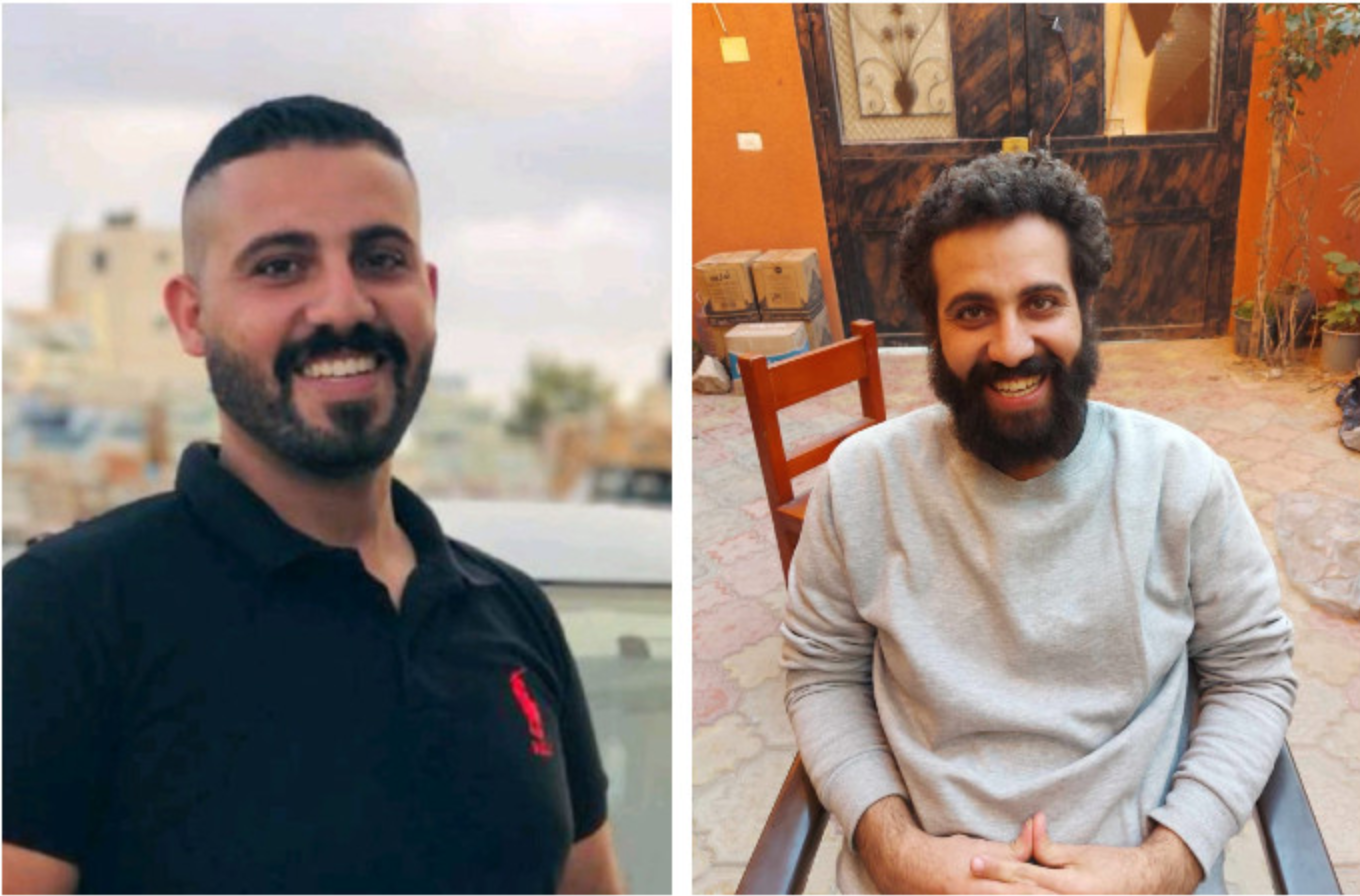
This piece appears in the twenty-first issue of The New York War Crimes.
Sign up for updates on the Freedom for Palestinian Political Prisoners campaign here, follow the campaign here, and take action here.